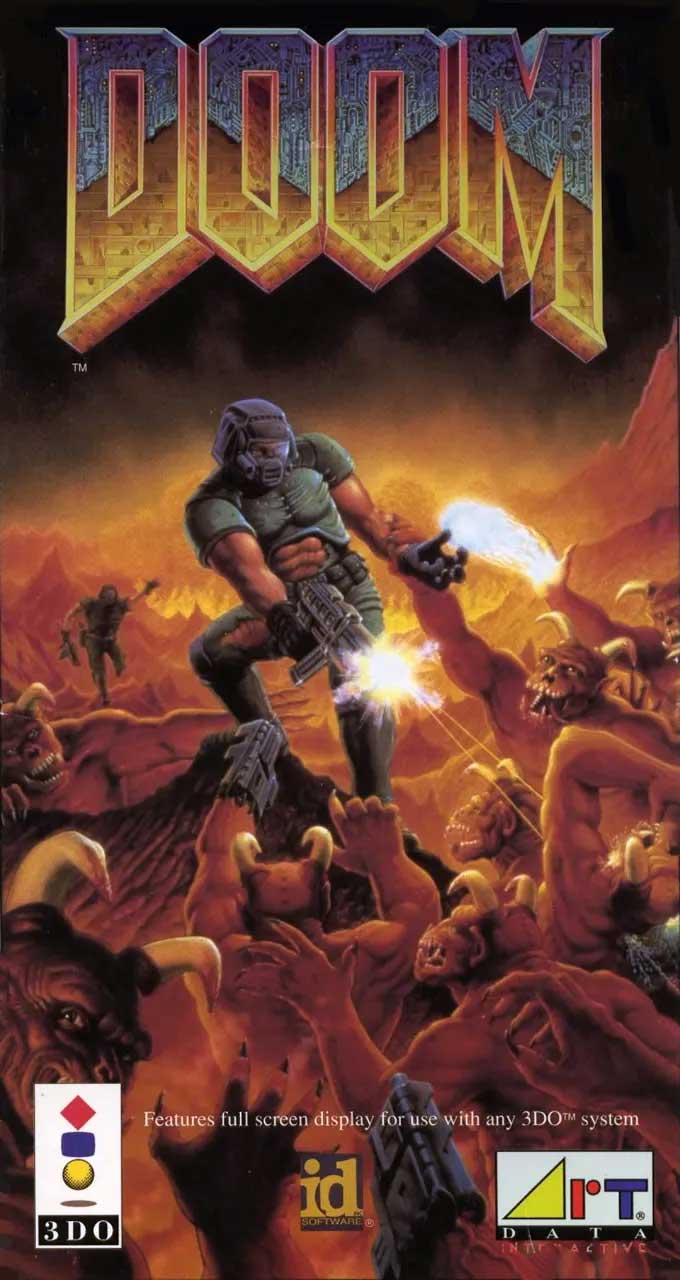
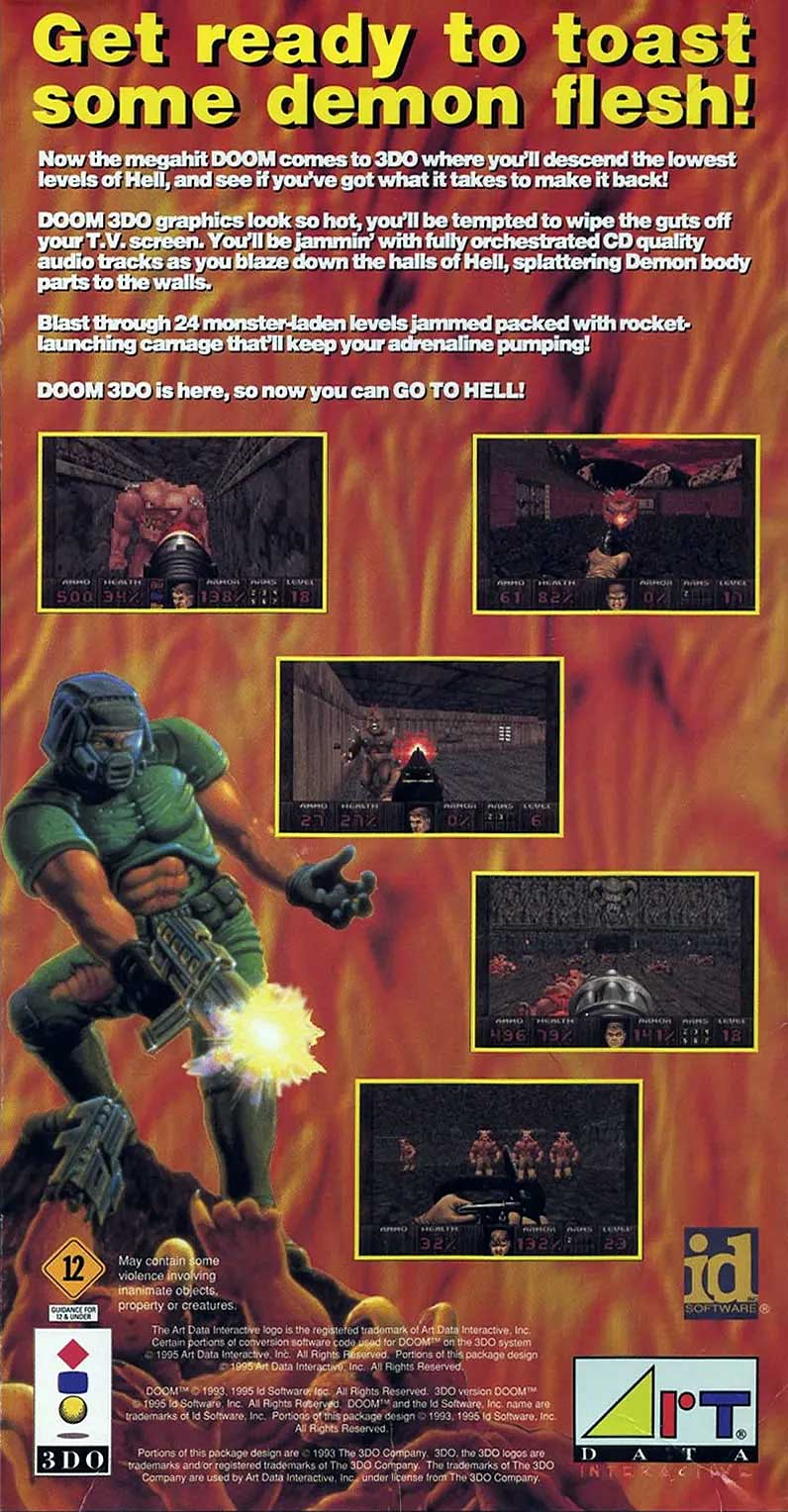
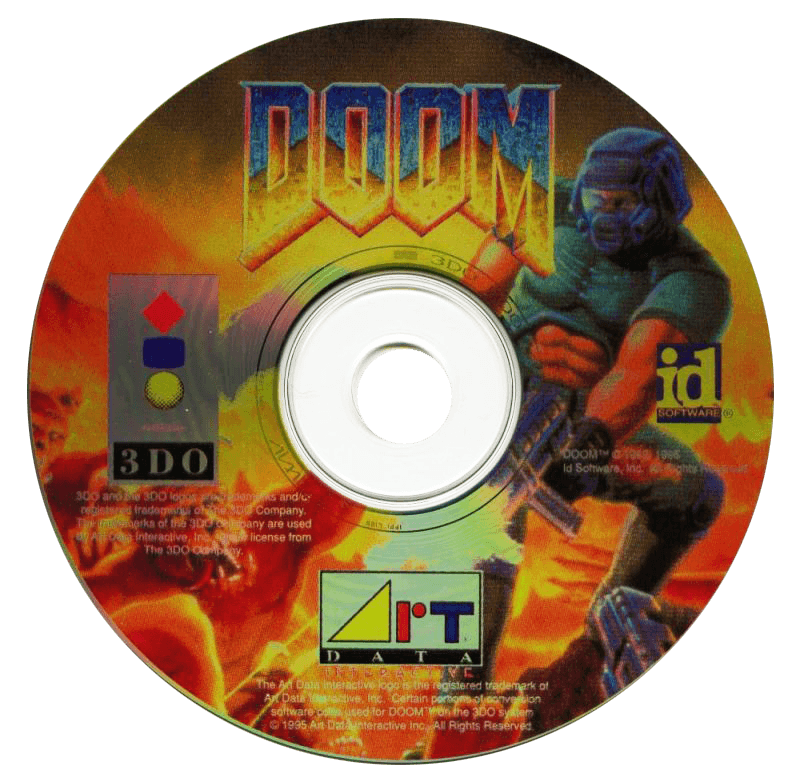
DOOM 3DO review

Doom on 3DO: A Tale of Hype and gross Mismanagement

The Promised Land:

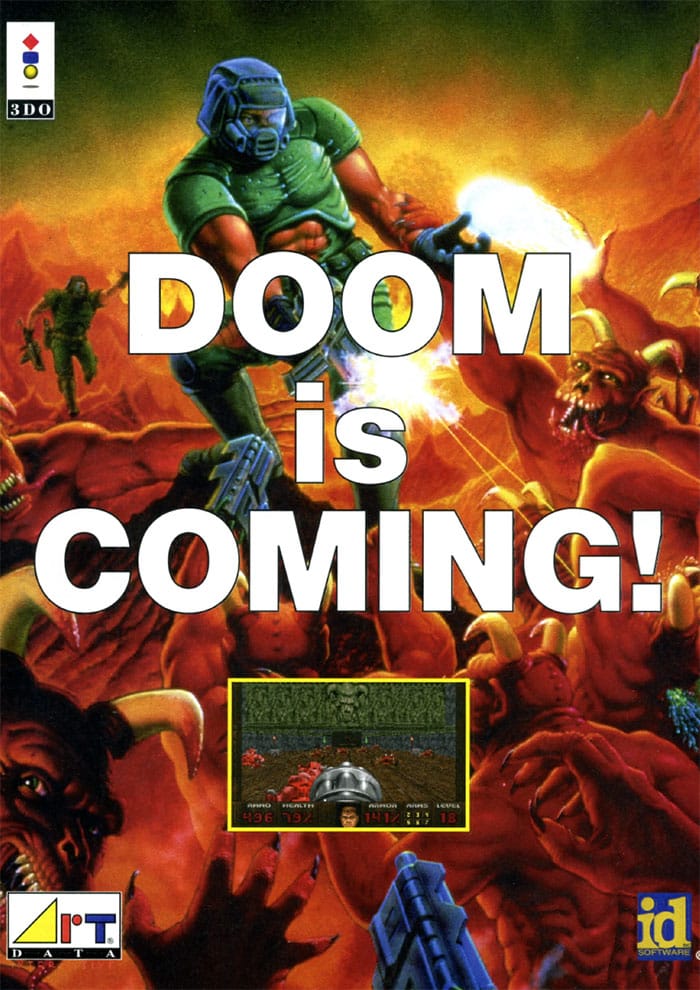
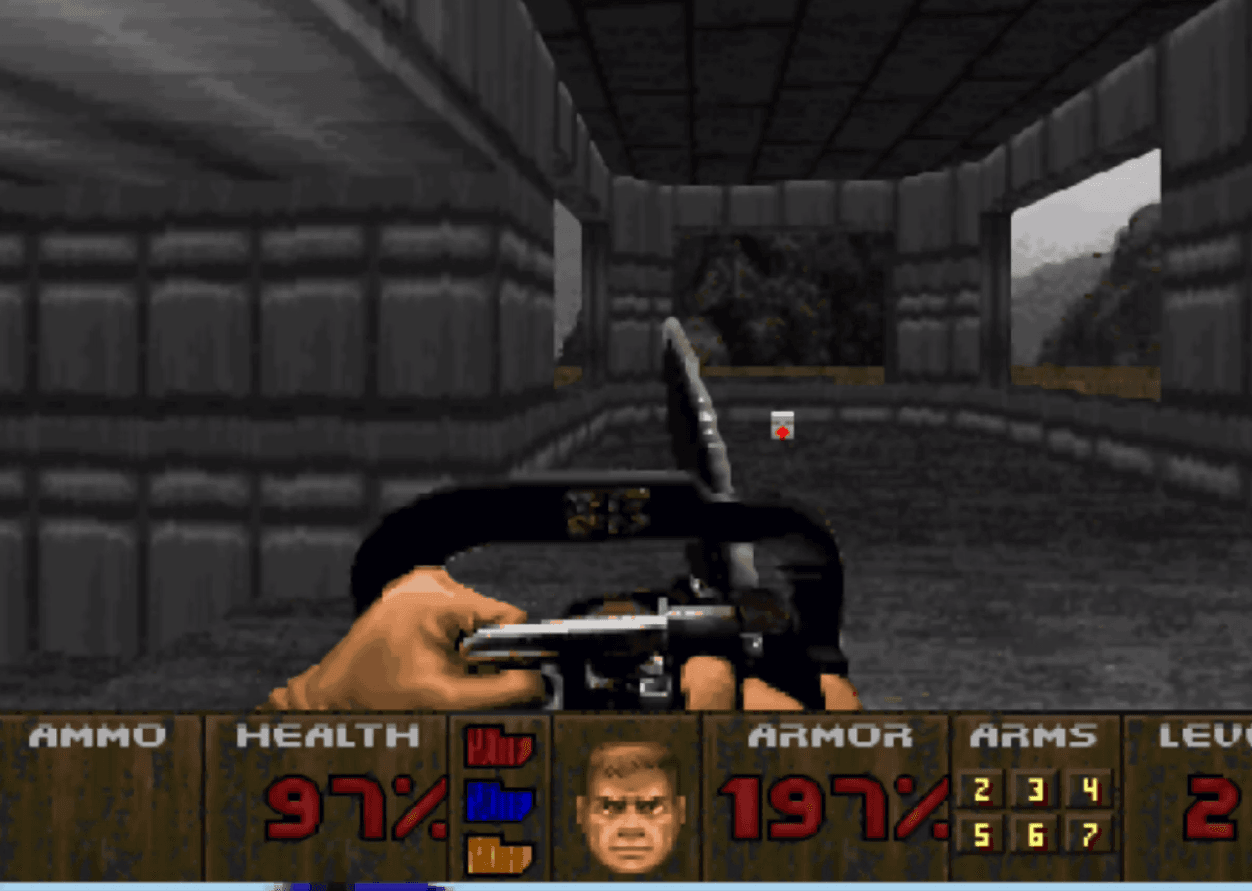
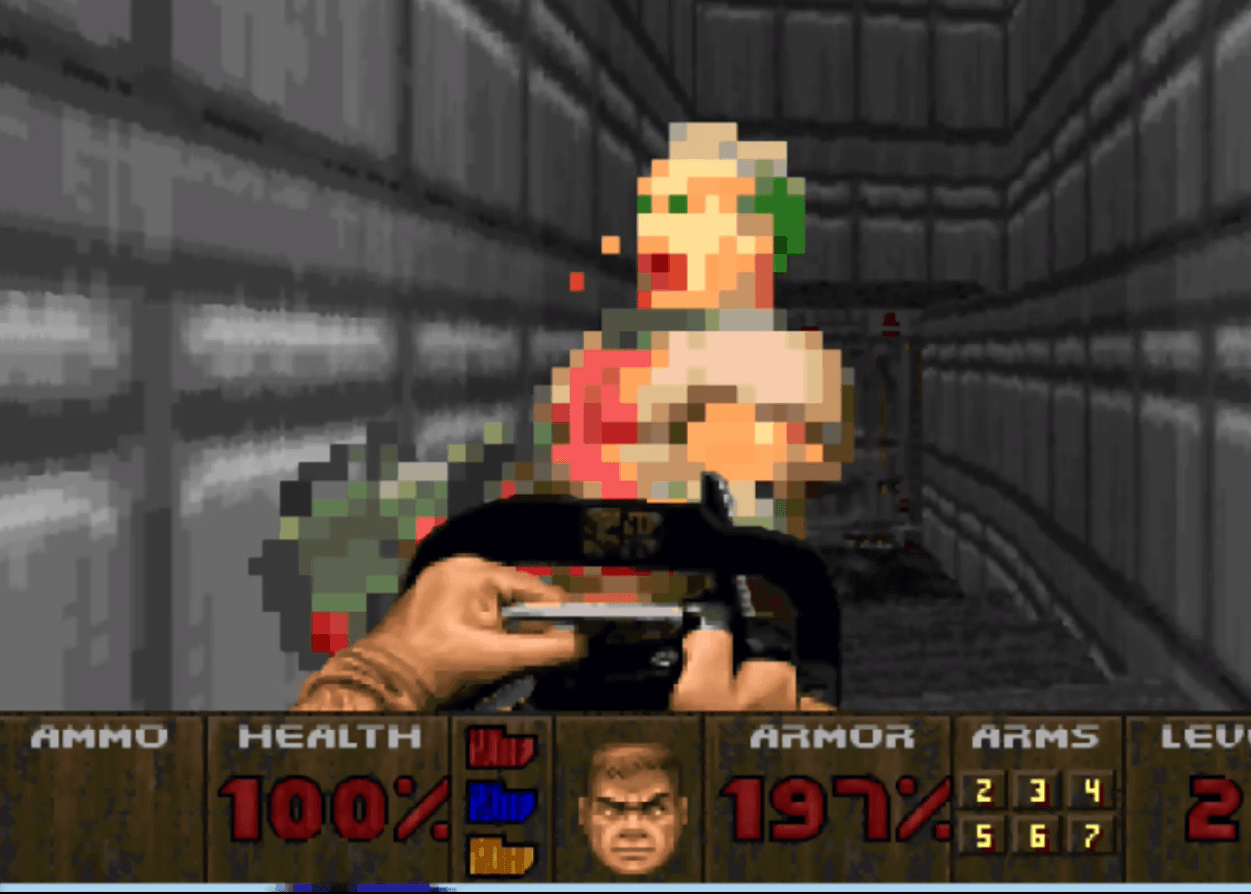
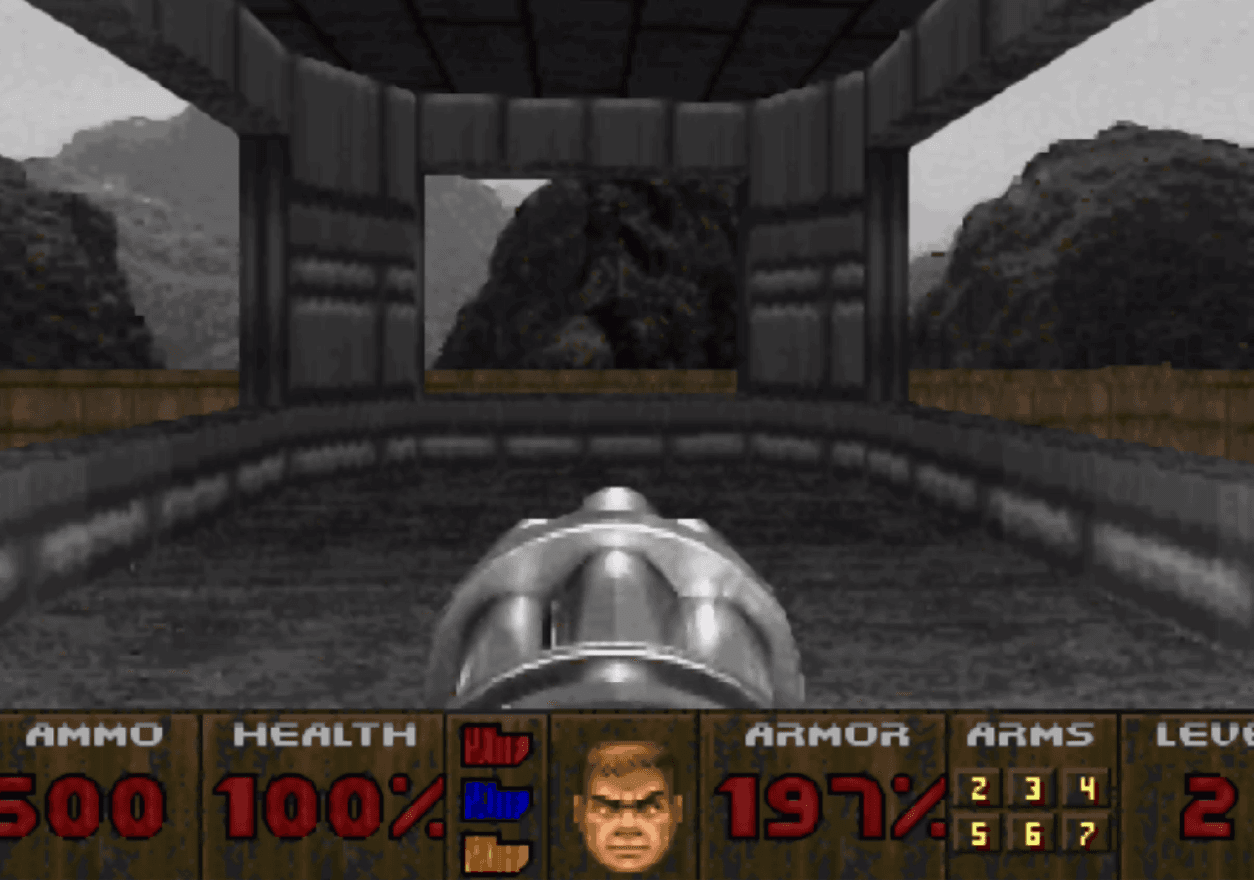
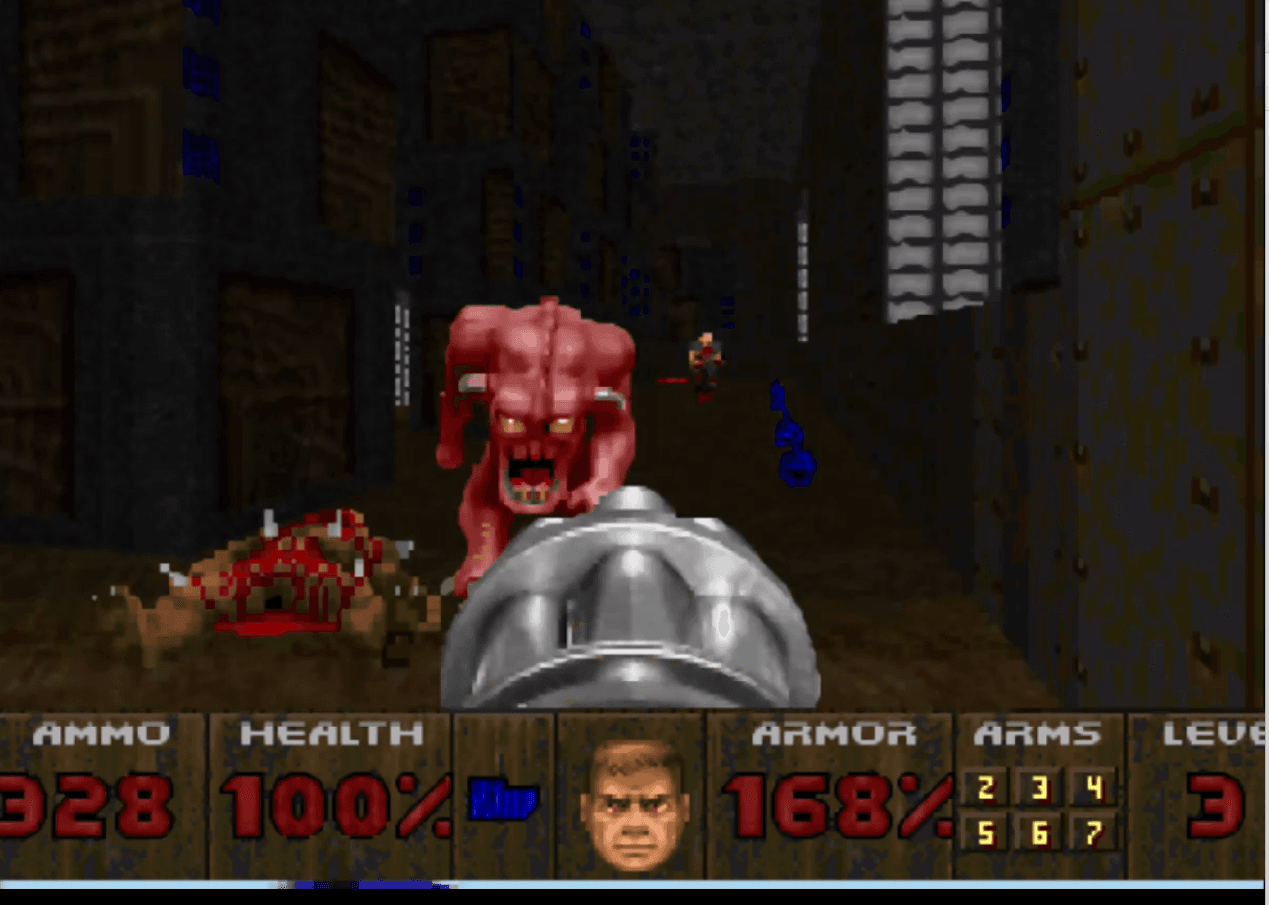
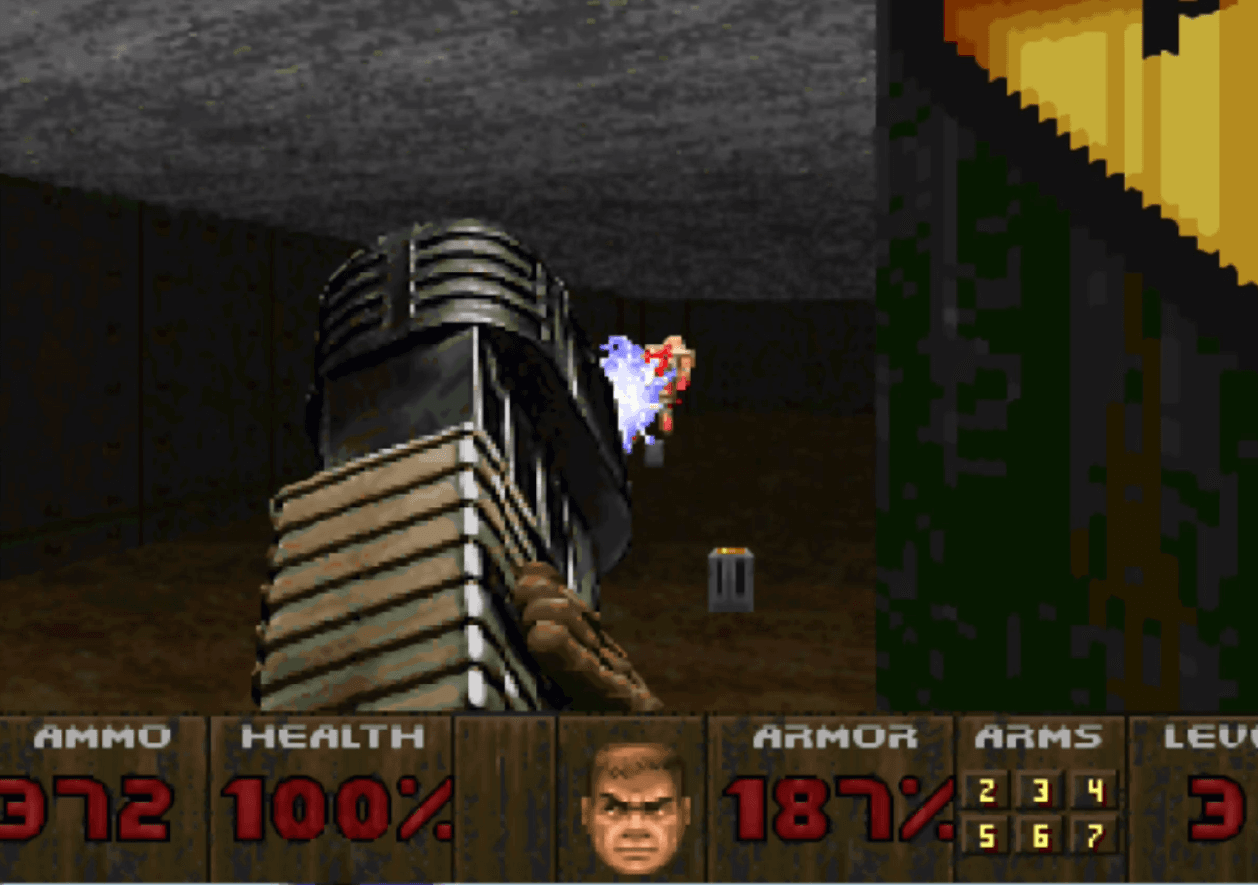
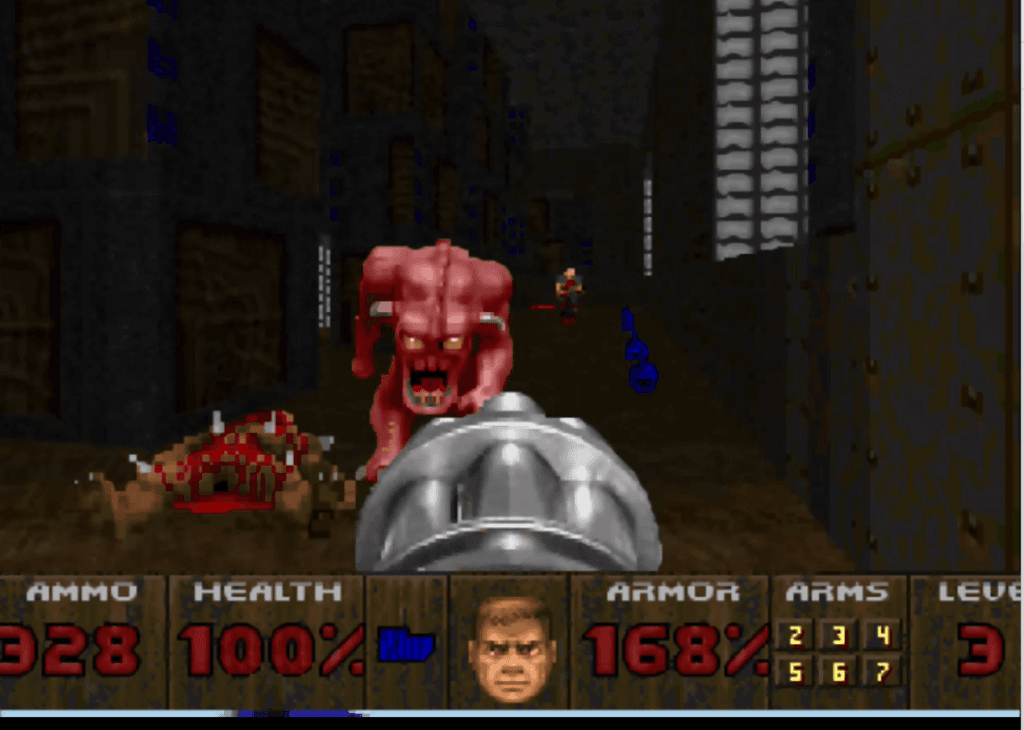
It was common knowledge that Doom on the 3DO was a highly anticipated and heavily promoted flagship title. However, the reality couldn’t have been further from the hype. Players were met with a sluggish frame rate, murky graphics, and a complete lack of promised features, including new levels, FMV, and weapons.

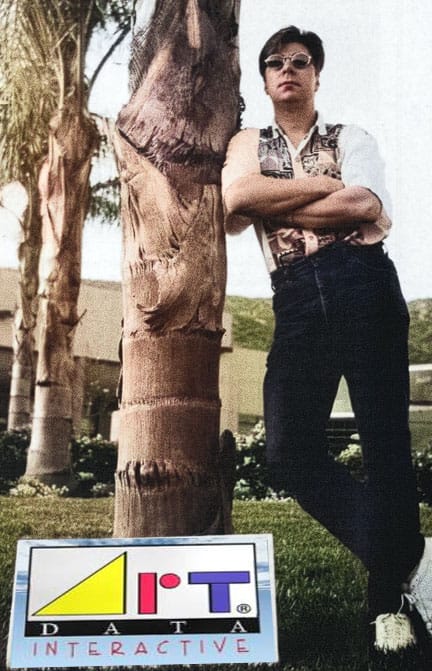
This stark contrast stemmed from the outlandish promises made by Randy Scott, the then-CEO of Art Data Interactive (ADI). Scott consistently boasted about a superior 3DO version, promising high resolution, no slowdown, and the best version of Doom anywhere.

A prime example of his bravado can be found in issue 3 of 3DO Magazine:

We’re now starting to see the first playable stages of 3DO Doom and there is simply no comparison between the PC and 3DO versions. Oh yeah. The stuff that we’re putting together is just going to be phenomenal. I tell everybody to load up your rocket launchers and break out the suntan oil because this is the hottest version of Doom that you’re ever going to see.”

This statement was a blatant lie, as no game code had  been written at that point.

A High-Priced License and Jaguar saviour:

ADI had paid a staggering $250,000 for the Doom license, a price that seemed exorbitant at the time. This exorbitant fee likely stemmed from ID Software’s preference for the Jaguar architecture over the 3DO.

As John Carmack of ID Software explained:

The biggest reason is that I doubt that 3DO is going to become a huge success. $750 is way out of line for a pure entertainment machine. Was the NEO-GEO a success two years ago? We bought one, but we don’t know anyone else that did. I doubt there will be all that many units sold.

The other major argument is somewhat philosophical. I don’t like what people expect out of CD games. Does anyone think that the cheese ball dialog in crash and burn is a GOOD addition? It turns my stomach. People expect CD games to be bloated with digitized speech and video, and the 3DO is going to be strongly associated with it. 

The joke here is that if we ever do a CD version of DOOM, you are going to get the game and “The Making of DOOM” a one-hour feature film. Companies spend hundreds of thousands of dollars putting all this media into their games, and it often actually detracts from it. We don’t want to be part of this crowd.”

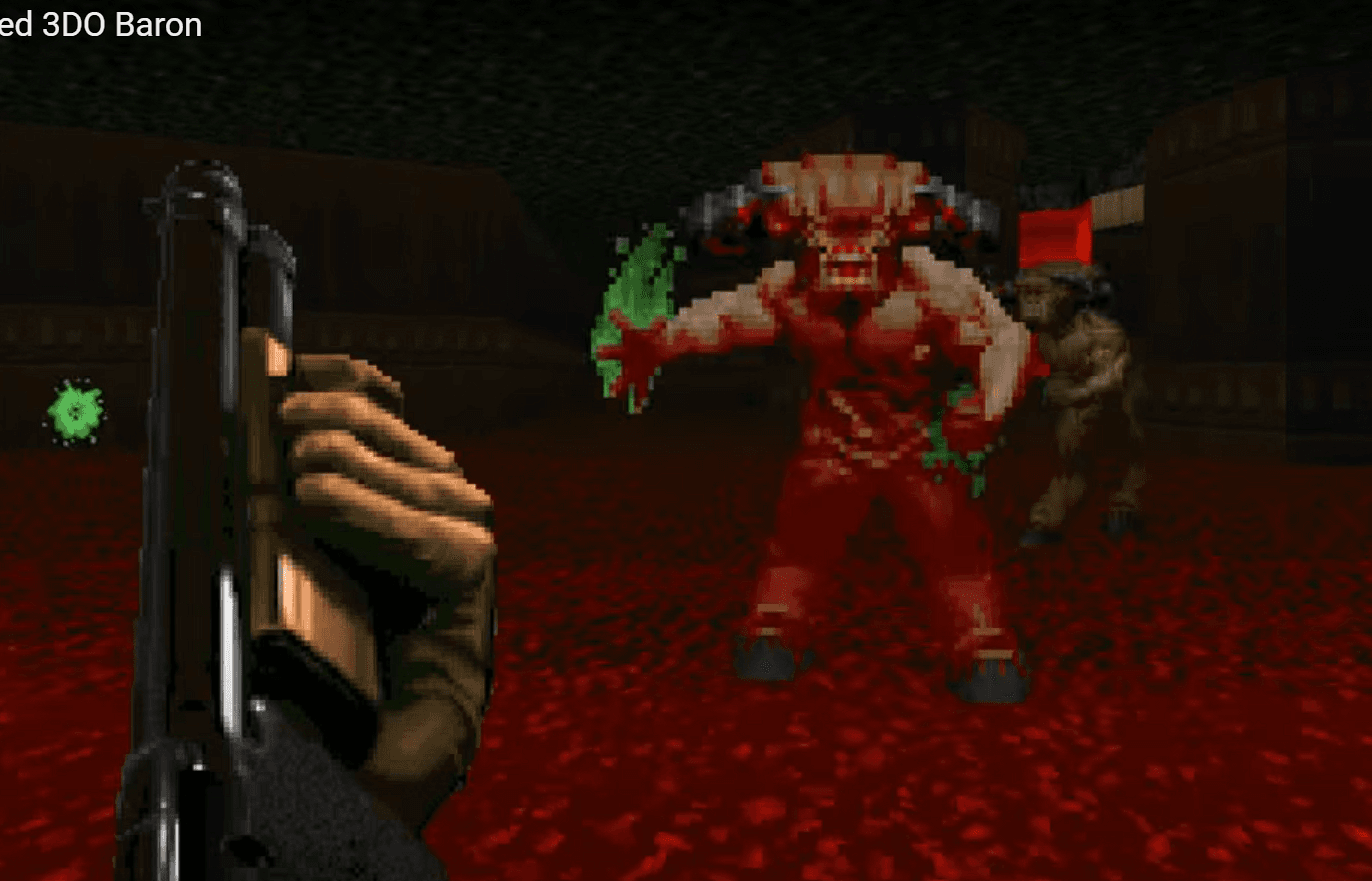
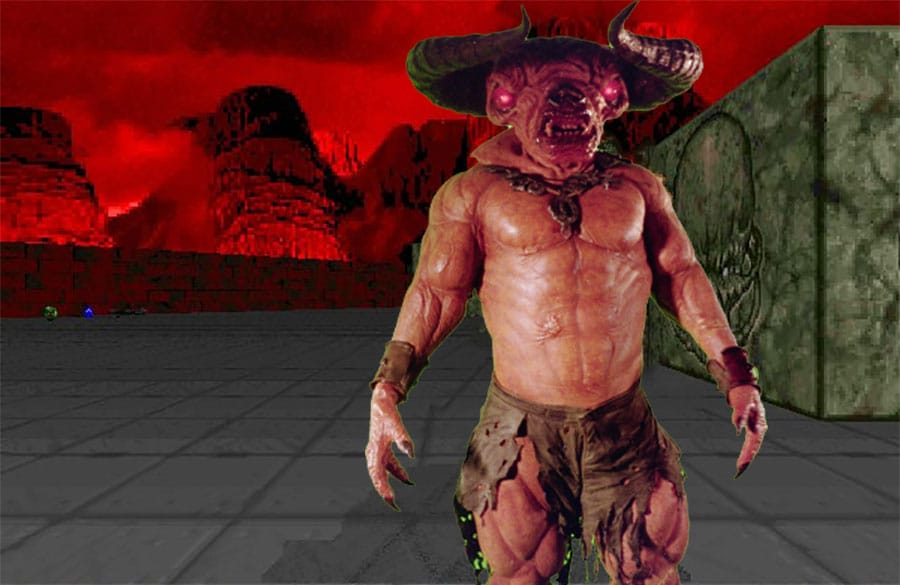
doom 3do demon

The Descent into Chaos:

Having secured the license, Scott, who had raised $1 million from local church-goers for his startup, inexplicably spent months hyping the game without any actual development. It’s rumoured 2 developers dropped out after arguments over pay. With a Christmas 1995 release date looming, Scott approached the 3DO company in August 1995, requesting technical support to “finalize” the game.

Enter Rebecca Heineman (see biography), a seasoned developer from her newly formed Logicware who had successfully worked on 3DO conversions for Wolfenstein 3D and Out of this World. The 3DO company, aware of her expertise, enlisted her help to salvage the project that was apparently 90% complete according to Scott.

However, Heineman’s initial request for the existing source code from ADI yielded a shocking result: she was sent the PC version of Doom. Scott, in his naivety, assumed a simple port of the PC code to 3DO was all that was required.

Exasperated, Heineman contacted ID Software, who as a favour provided the Doom source code along with the existing Jaguar version programmed by John Carmack on the Nextstep platform . This Jaguar port, optimized for the 1MB Jaguar console, proved to be a crucial starting point.

A Confrontation with Reality:

An exasperated visit by Rebecca to the ADI offices revealed the true extent of Scott’s incompetence. Despite his grandiose claims, Scott had no actual code, only visual JPEG  mockups of new weapons and levels.

Faced with a rapidly approaching deadline and mounting pressure from the 3DO company, Heineman reluctantly agreed to adapt the Jaguar version for the 3DO with none of the enhancements promised by Randy.

A Race Against Time:

Heineman successfully ported the Jaguar code to the 3DO in 10 weeks, albeit resulting in a sluggish 10 frames per second due to time constraints. To address the lack of a compatible soundtrack ,Scott, surprisingly, proved to be a talented guitarist and re-recorded the entire Doom soundtrack with his makeshift band. This music , ironically, became the only truly original and upgraded aspect of the 3DO version.

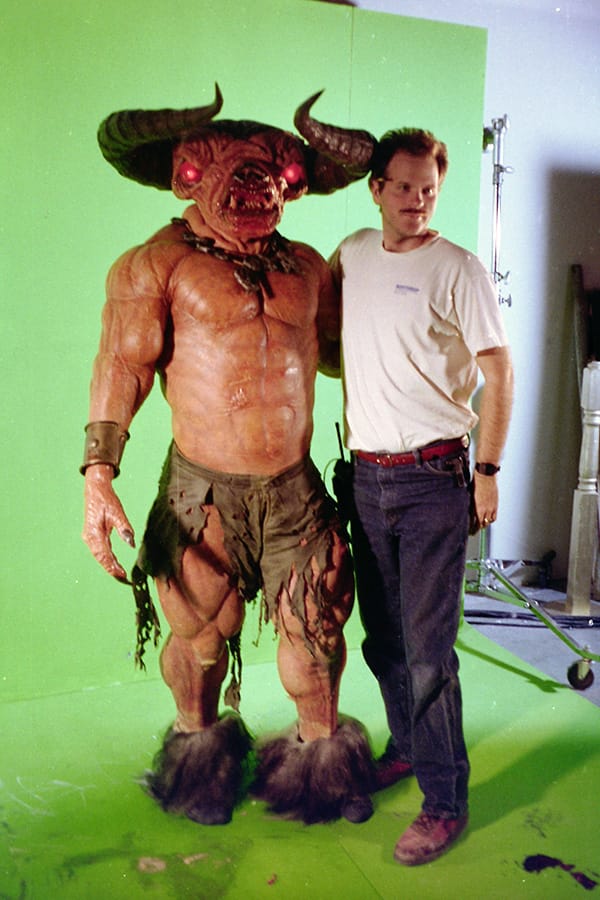
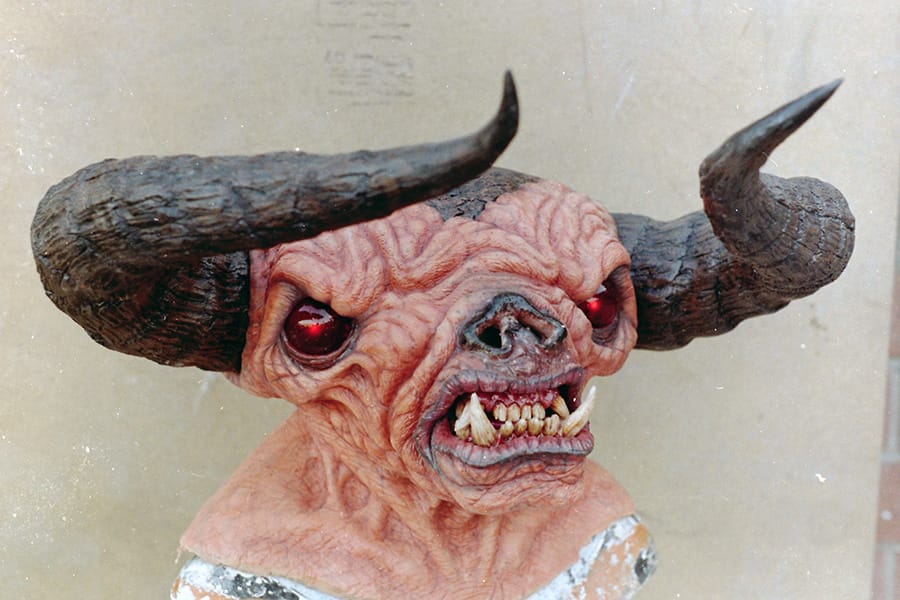
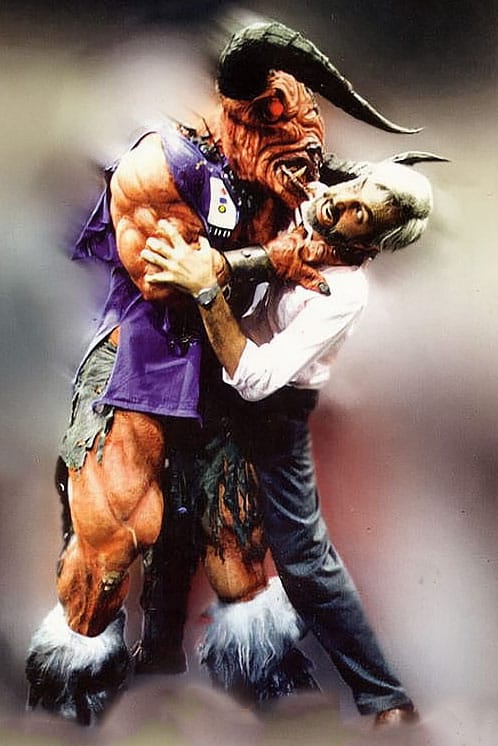
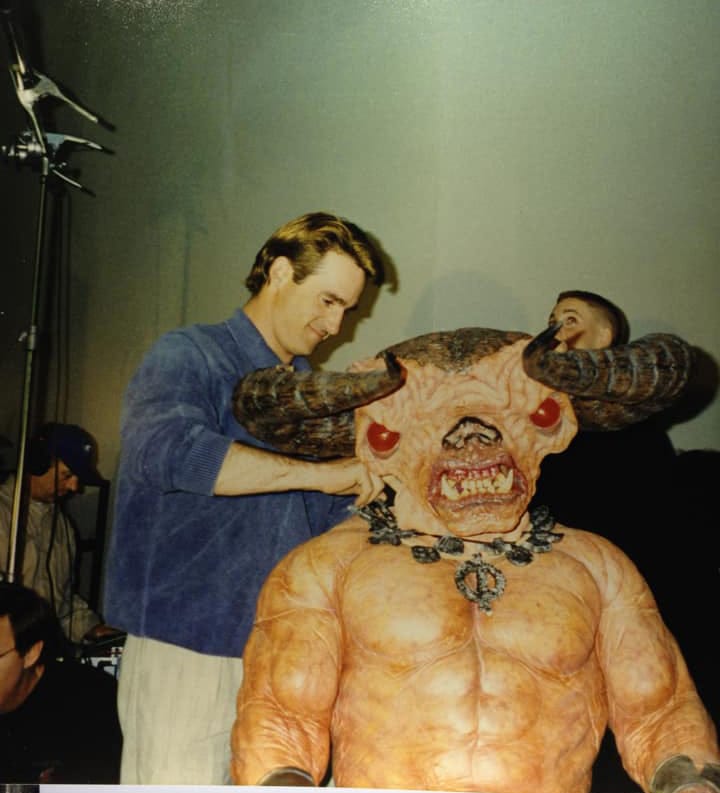
Hell Baron model from Doom 3DO at CES
Hell Baron and RJ Mical ham it up at CES

The Abysmal FMV and a Flurry of Last-Minute Requests:

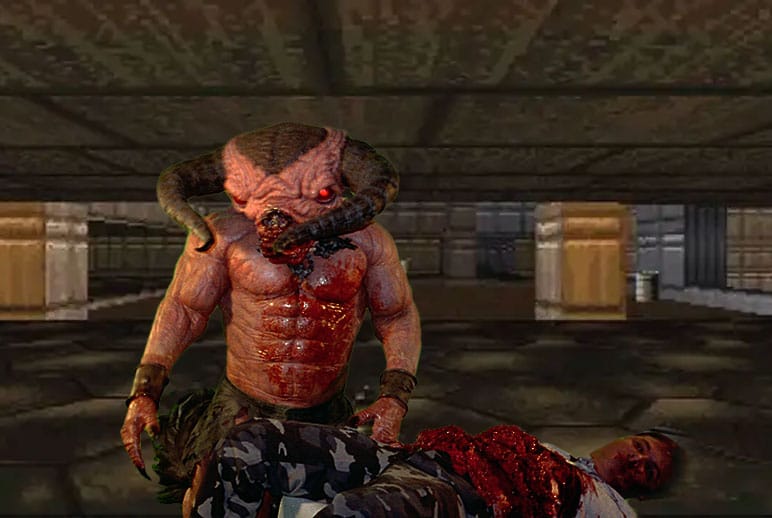
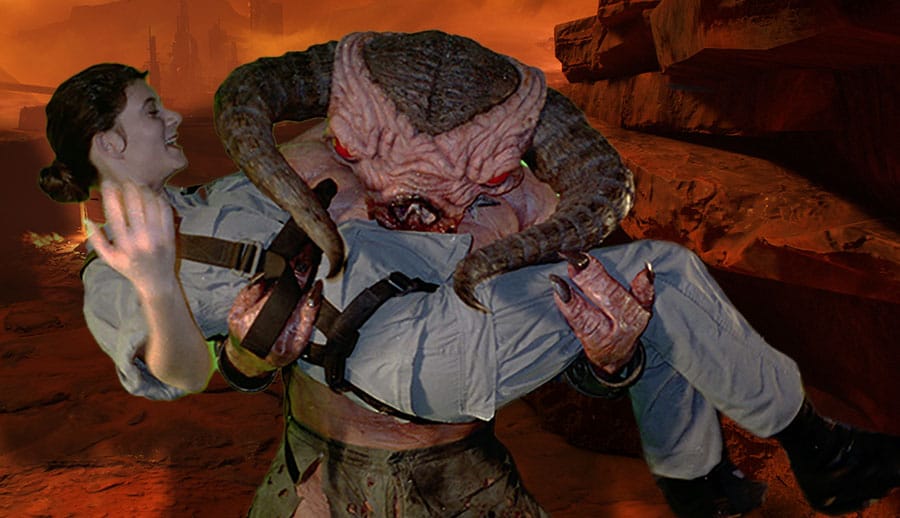
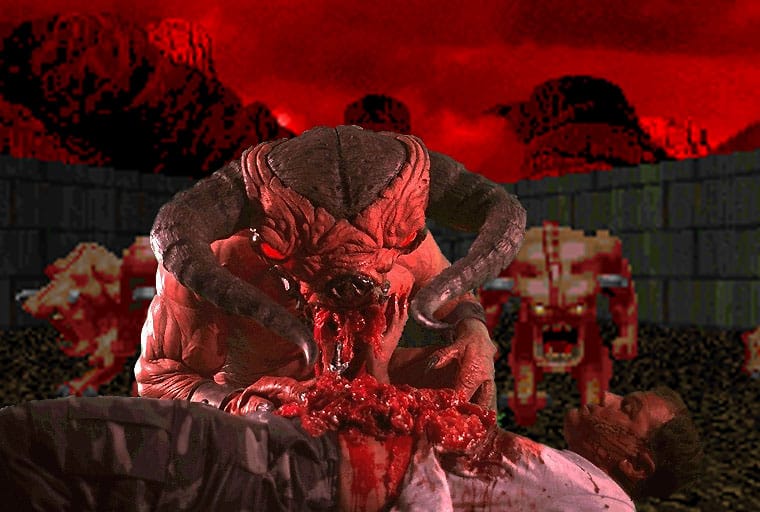
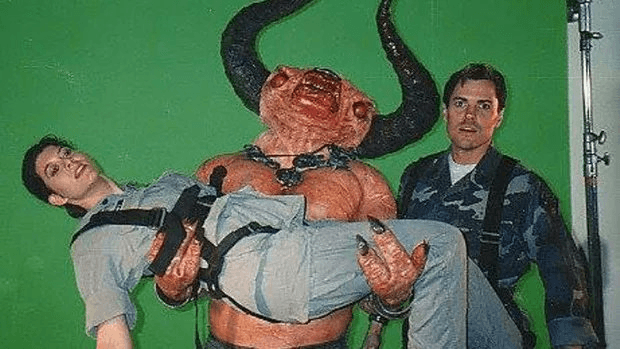
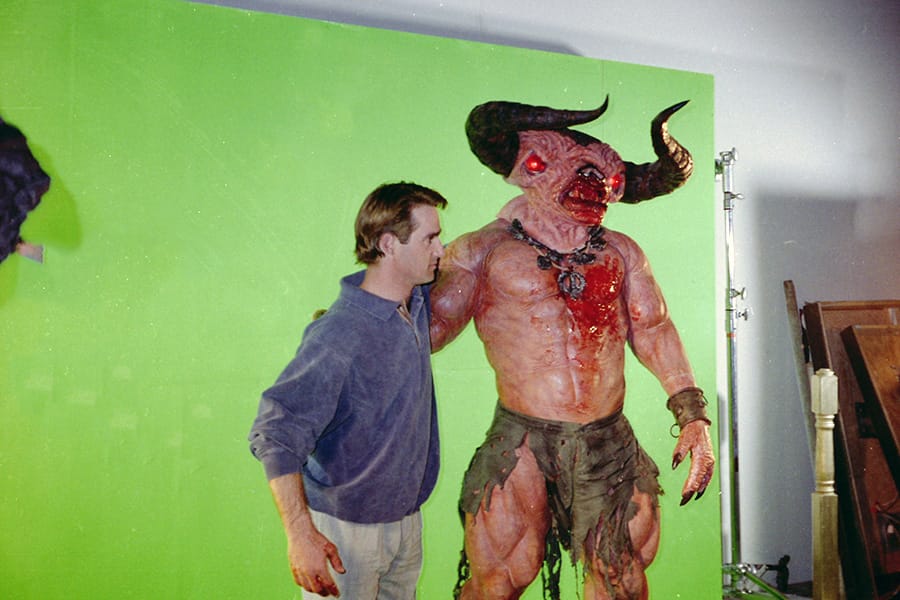
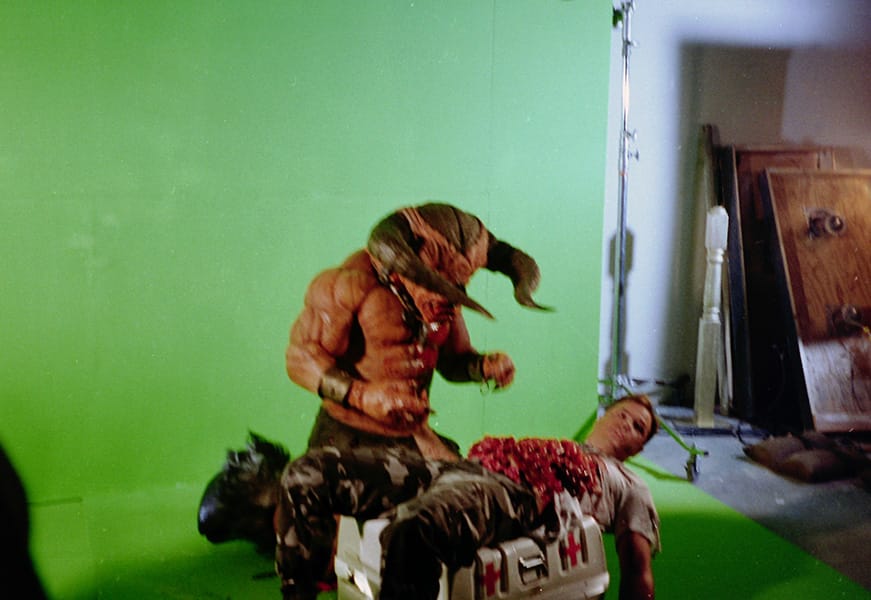
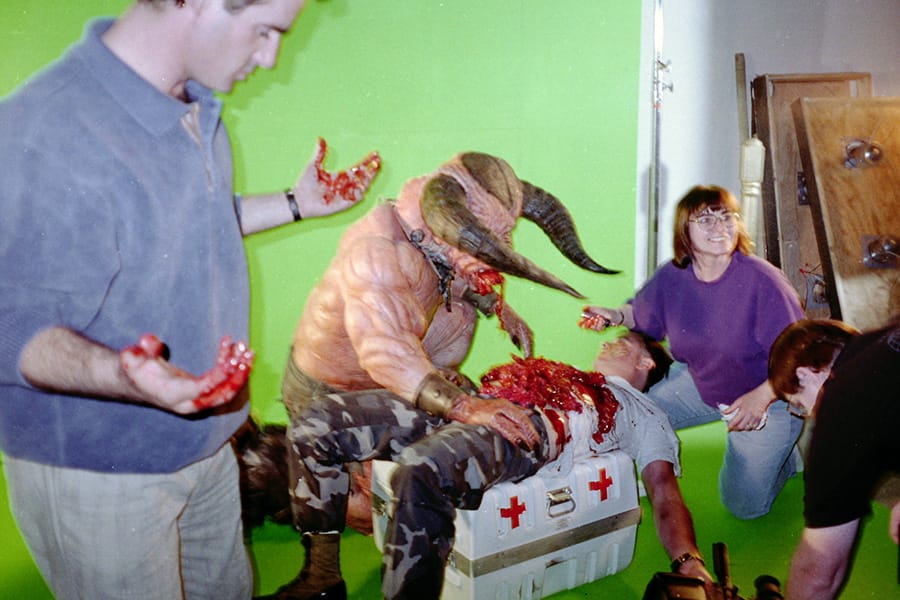
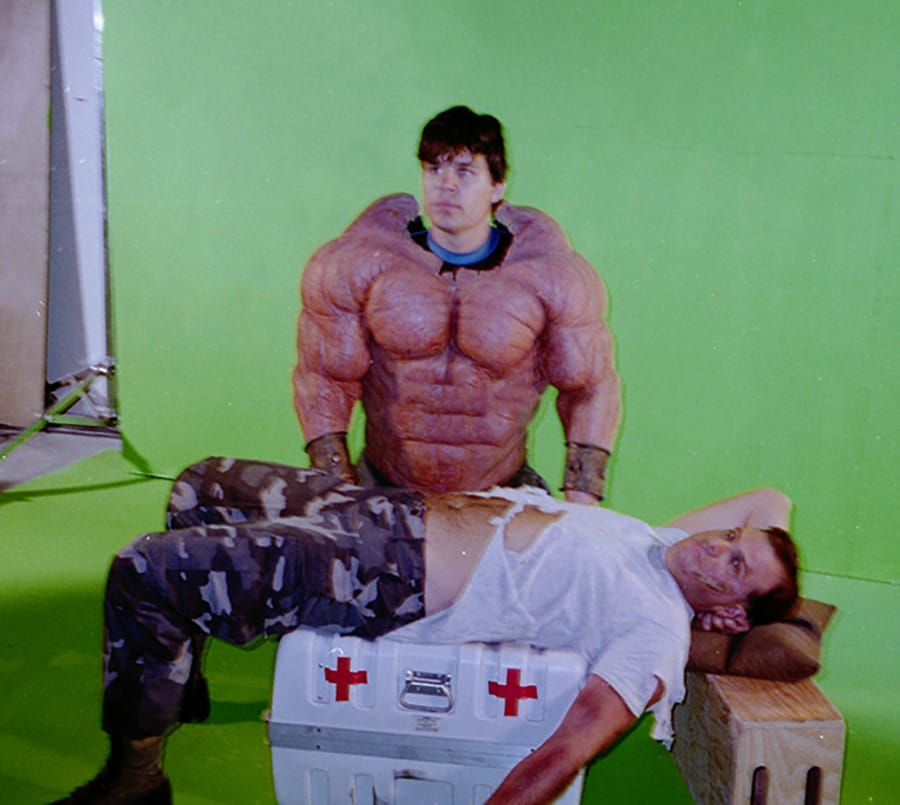
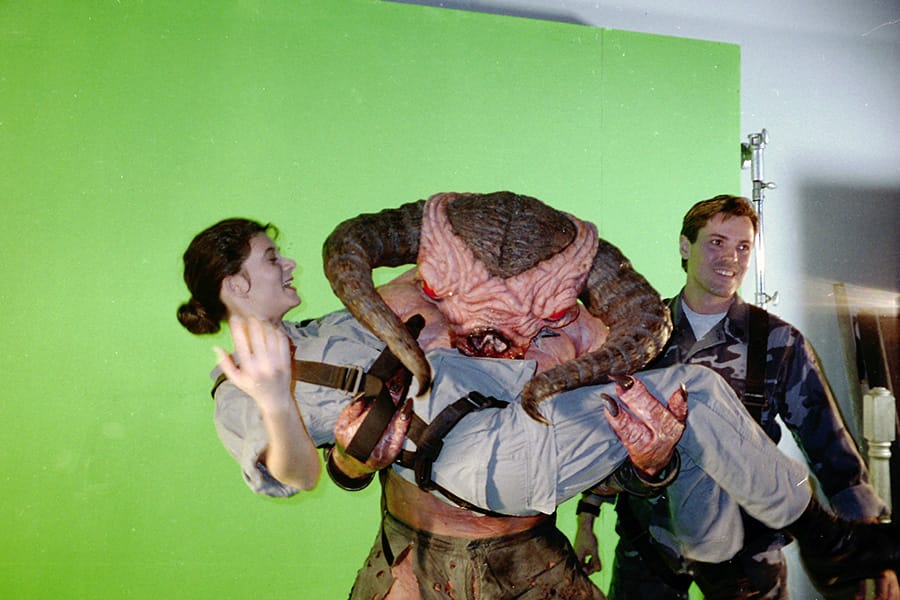
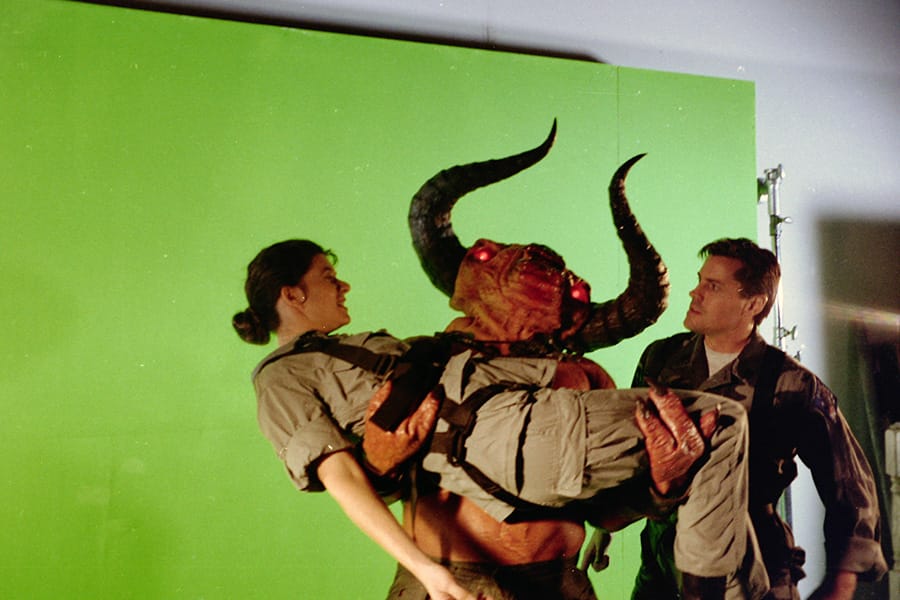
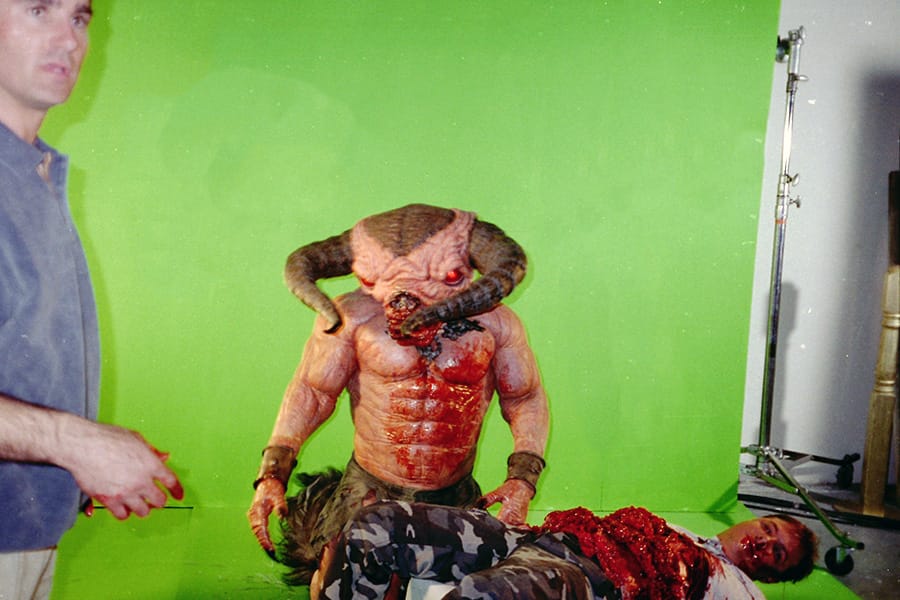
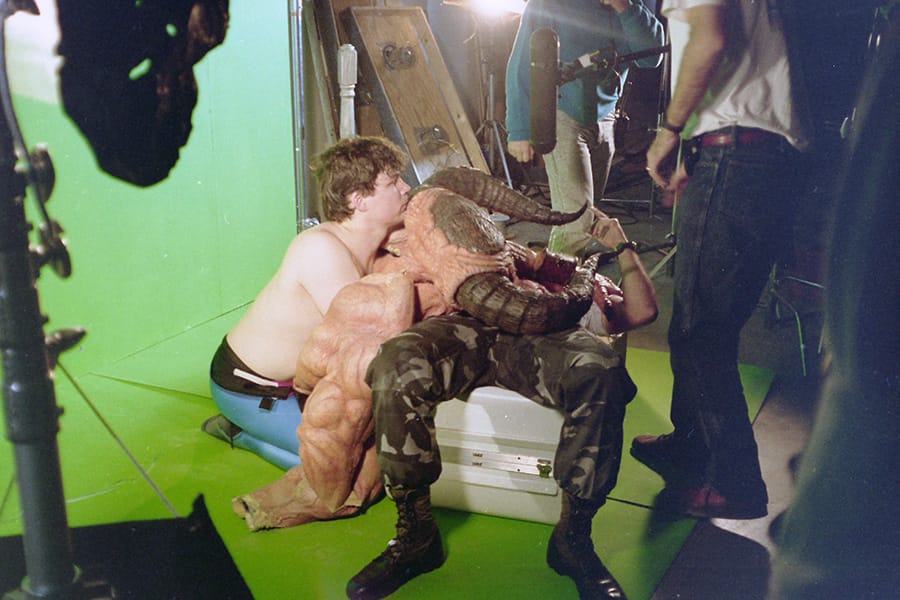
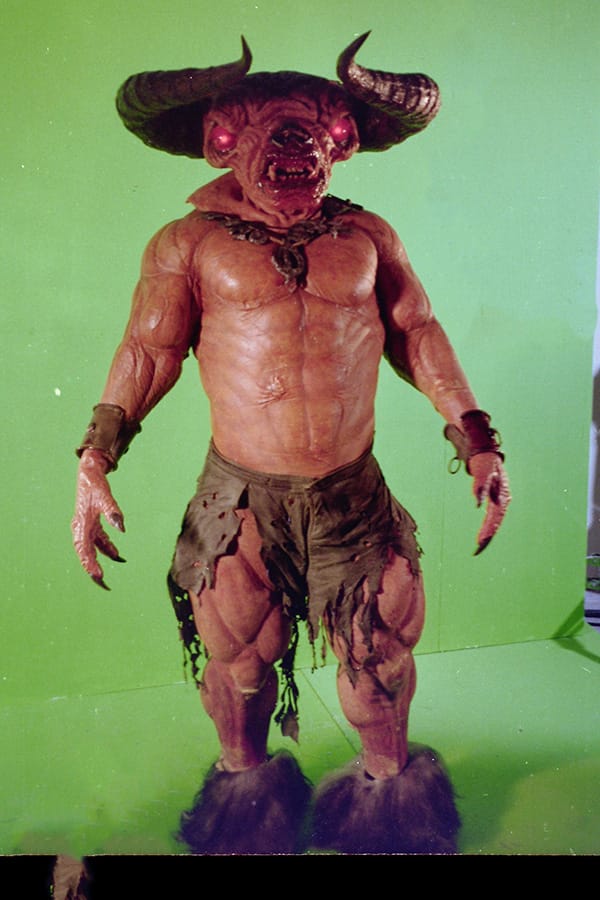
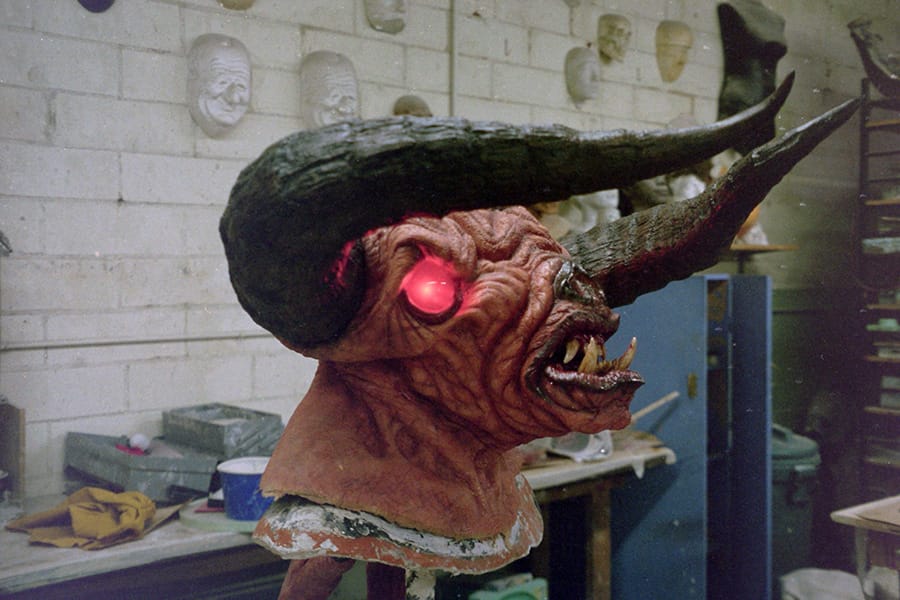
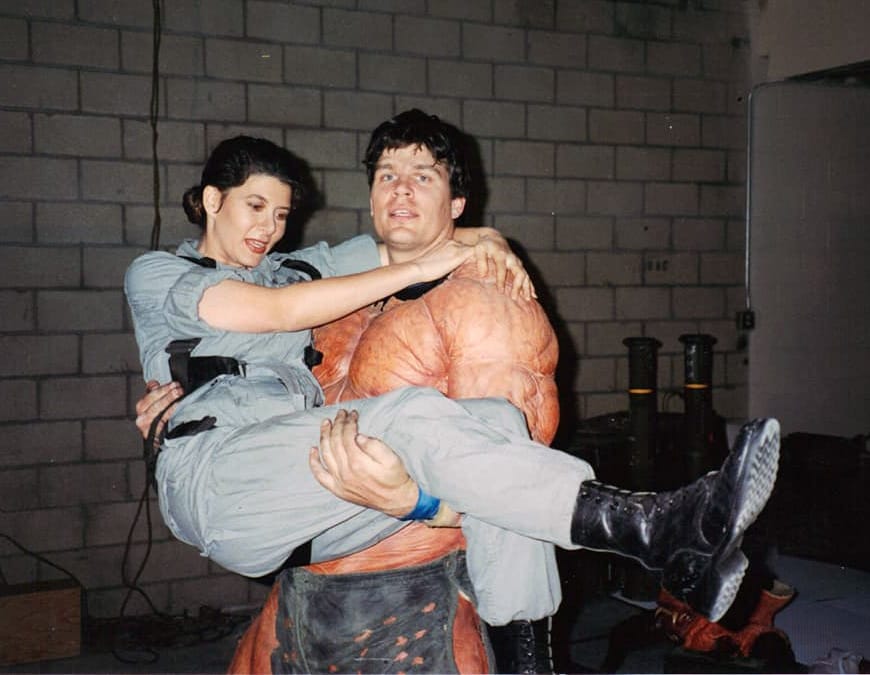
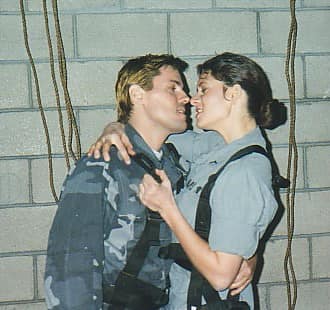
Two weeks before release, Scott attempted to incorporate poorly shot gory FMV into the game. Earlier in the year it turned out that Randy had paid $10k to a company called Global Effects to shoot some footage of an actor in a custom monster suit devouring players. This footage, featuring a “lifelike” Hell Baron monster devouring players, was shot on an inadequate  small green screen at Art Data offices  and  was deemed unusable by Heineman.

I told him I could not use any footage and ignored him and shipped what I had.

Doom FMV will ‘suck’

To get an idea of the FMV quality- here’s a quote from Jaguar developer Scott Le Grand in 1995 on Atariage forums: 

Then again, if 3DO Doom at all resembles the FMV I saw for it at the Art Data Booth, jag fans have nothing  to worry about, it will suck, and it will suck royally… Maybe they’ll go the route of Crystal Dynamics and add hecklers to their own FMV…

Imagine FMV with the acting quality of Baywatch and the special FX of  Voyage to the Bottom of the Sea.  Yes, it was that bad, and no Pamela Anderson to distract you from its failings, just a wimpy Darrien Lambert look and feelalike as “Our Hero”

Randy’s FMV Gore fest

Randy Scott on the other hand, had another take on his movie masterpiece:

“We have FMV that we went out and filmed at one of our film locations and it was so bloody and so gory that we couldn’t use it. You’ve seen the pictures of the model that we used for the game- it’s so lifelike its incredible- terrifying.

And we basically had this monster eat the gameplayers alive when he lost a life. We bought down a special FX artist and he was basically lying on his back, shooting upwards at a door that would fly open to reveal this monster with his snout buried in the gameplayers stomach and when the monster brought his mouth up he pulled with it a couple of feet of intestines while all sorts of giblety things dripped from his mouth.

 It was a little too real, very graphic. The stuff we’ll use for Doom 2 will be like that!”

A Disastrous Launch and a Tarnished Legacy:

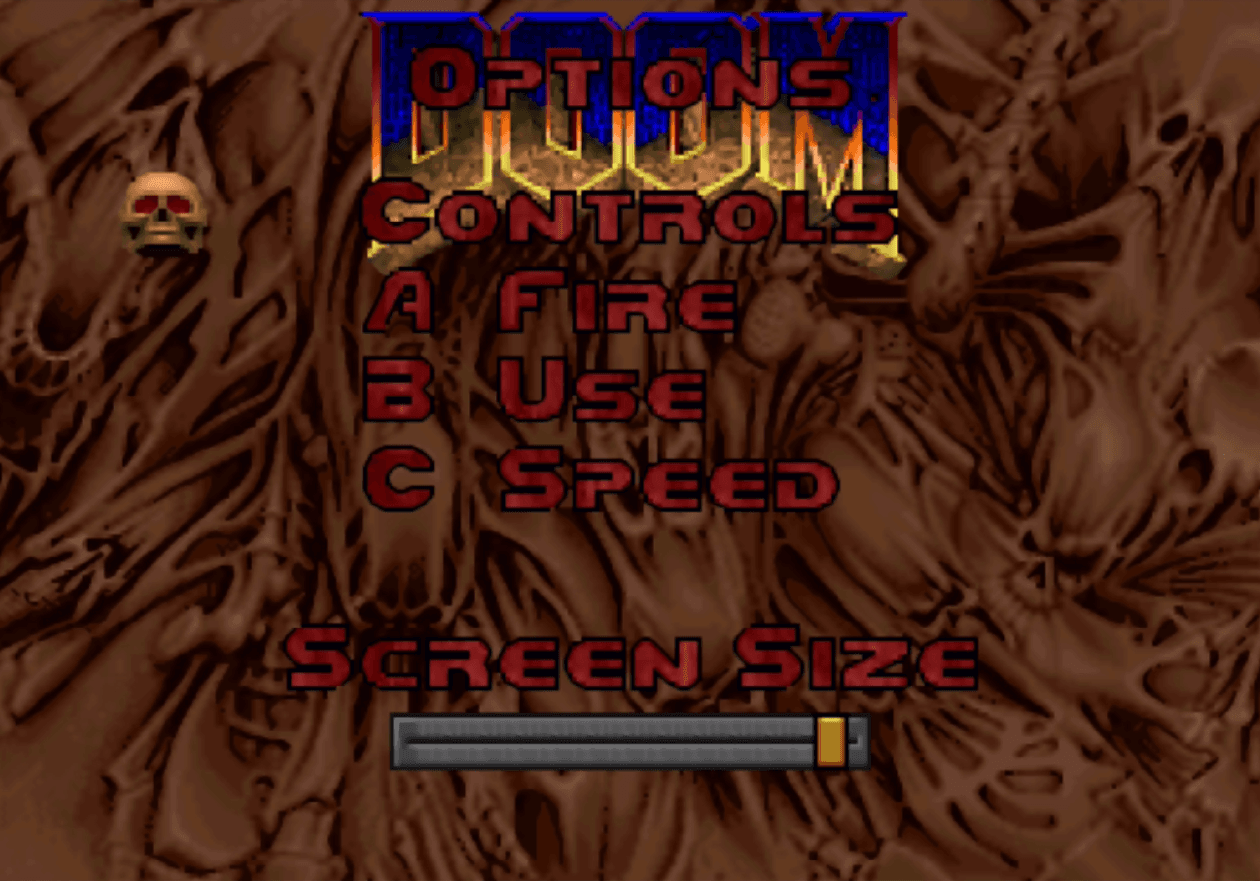
Despite the numerous setbacks and the subpar final product, ID Software reluctantly approved the 3DO Doom release once Rebecca added options for smaller screen sizes to speed up the framerates. Heineman also included an option for a full-screen mode, anticipating a future M2 add-on that would improve performance.

The game sold poorly, with only around 10,000 units moving despite a total inadvisable print run of 50,000 undertaken by Randy. ADI subsequently went bankrupt in 1996 after another game called Chess Wars (chock full of clunky FMV fighting Knights) failed to sell.

Commercial Failure:

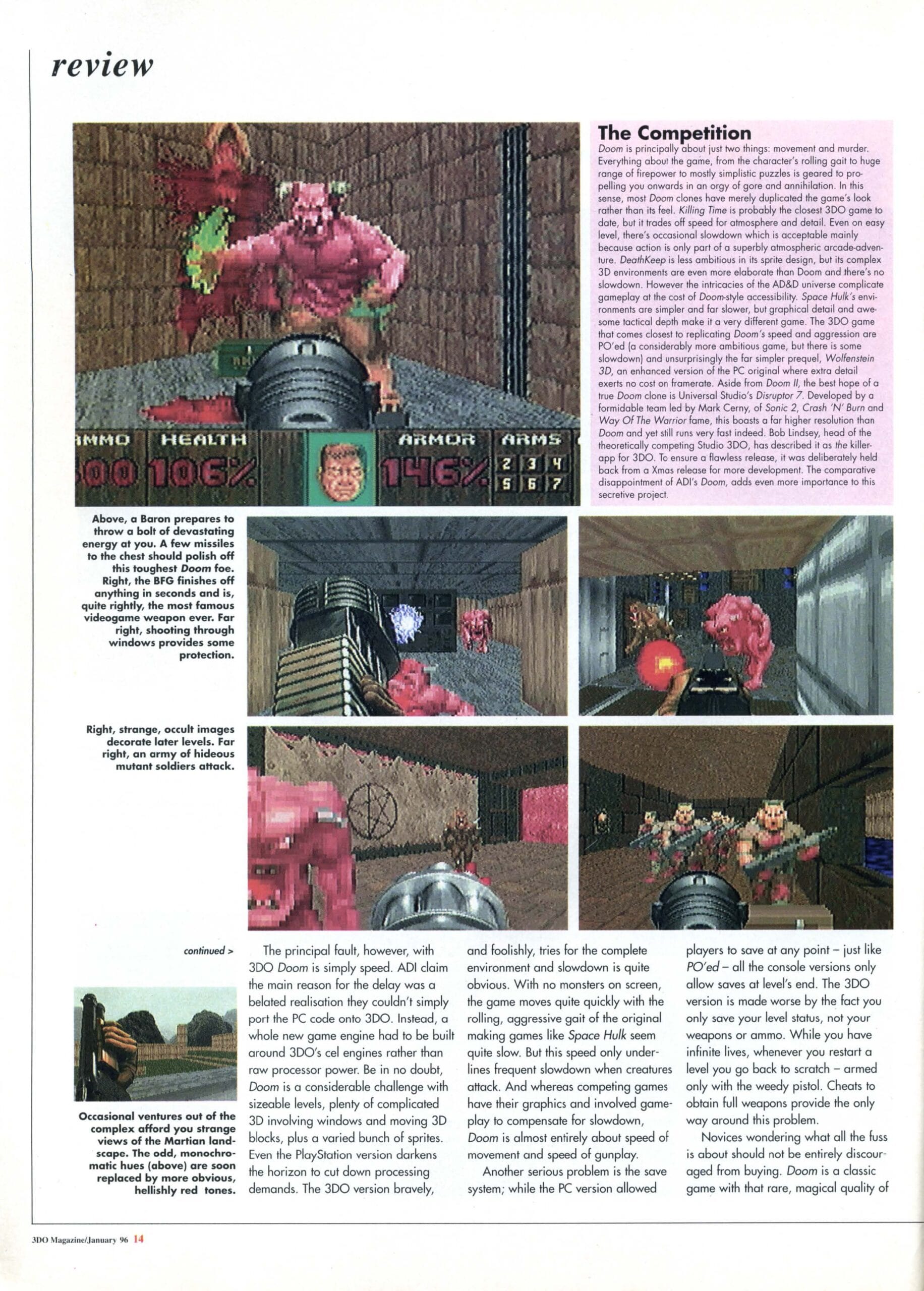
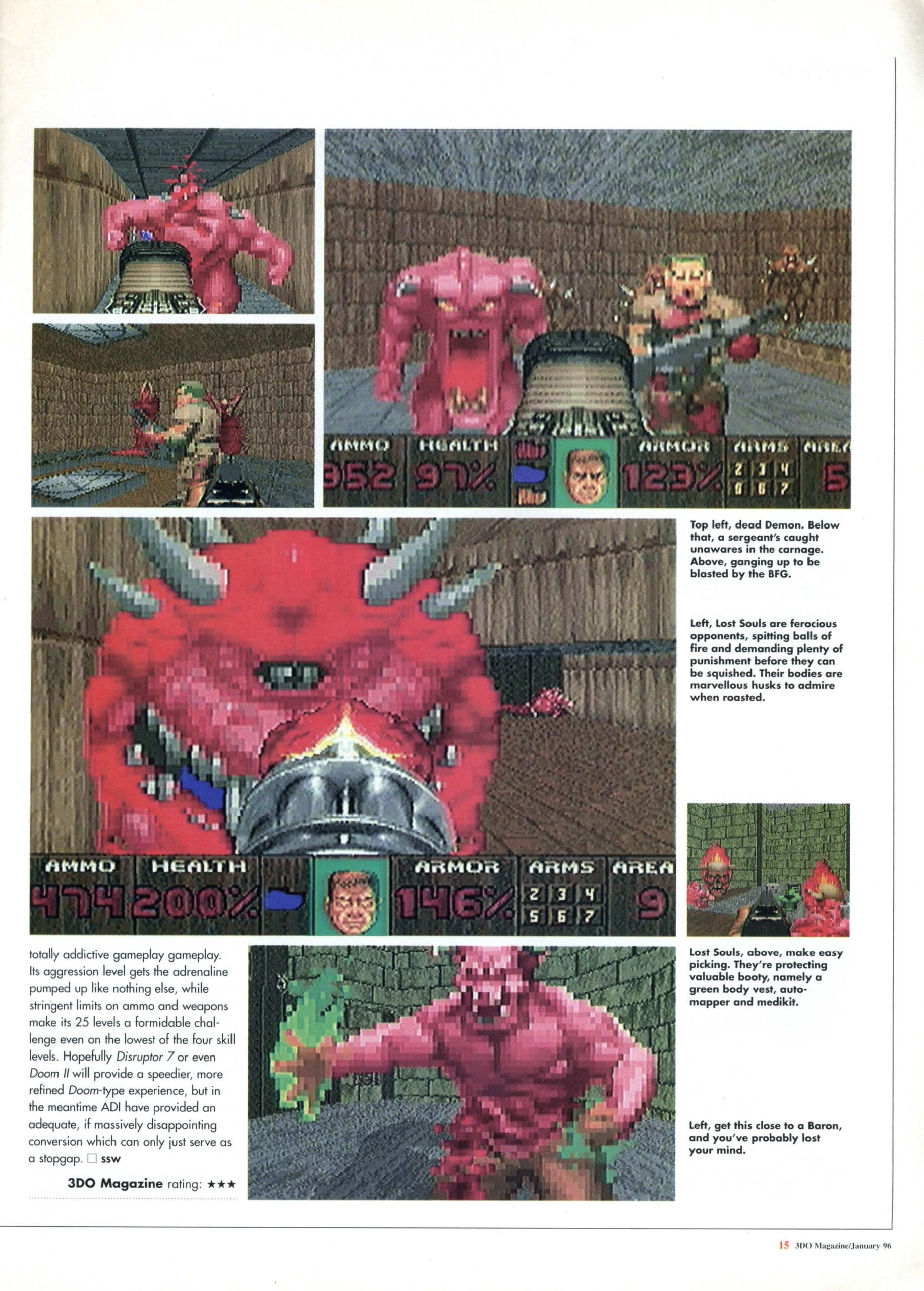
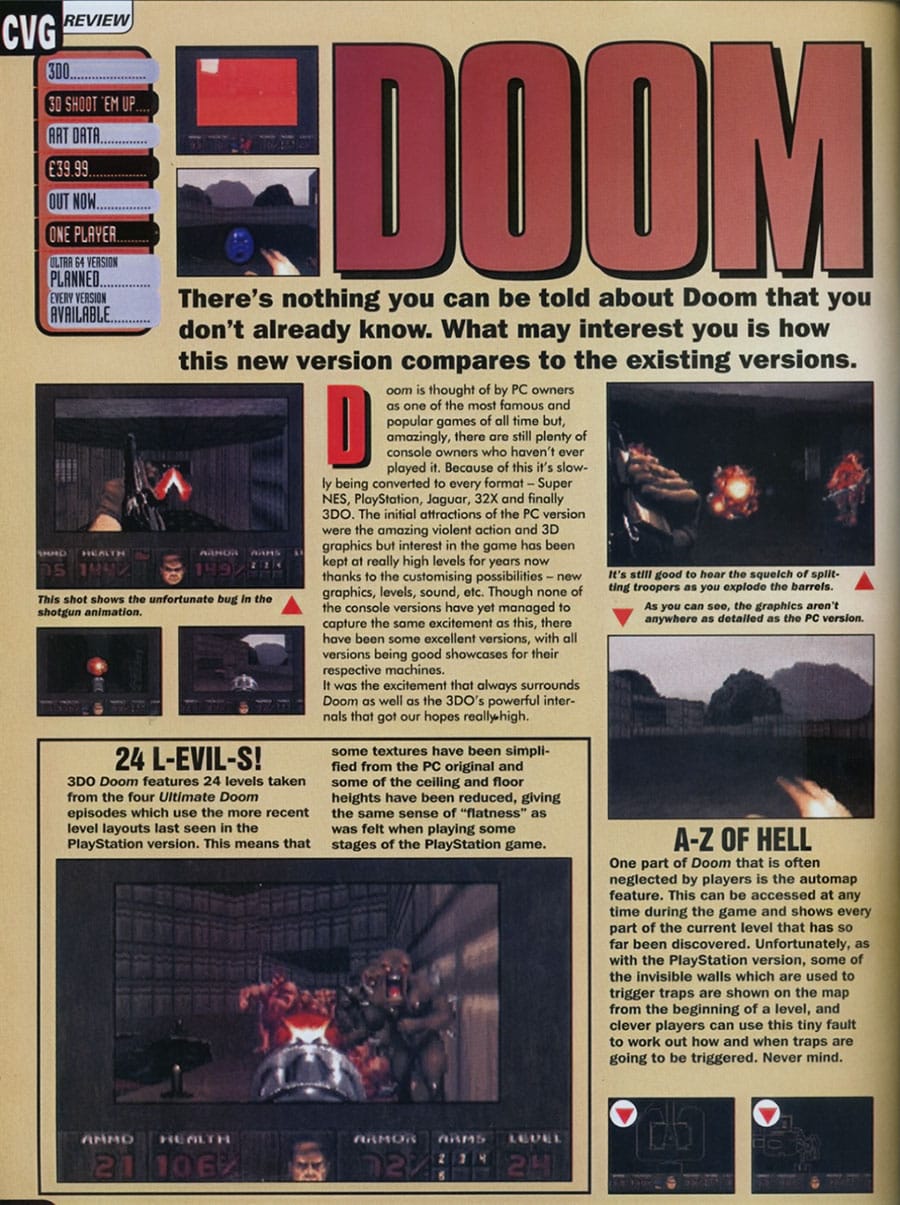
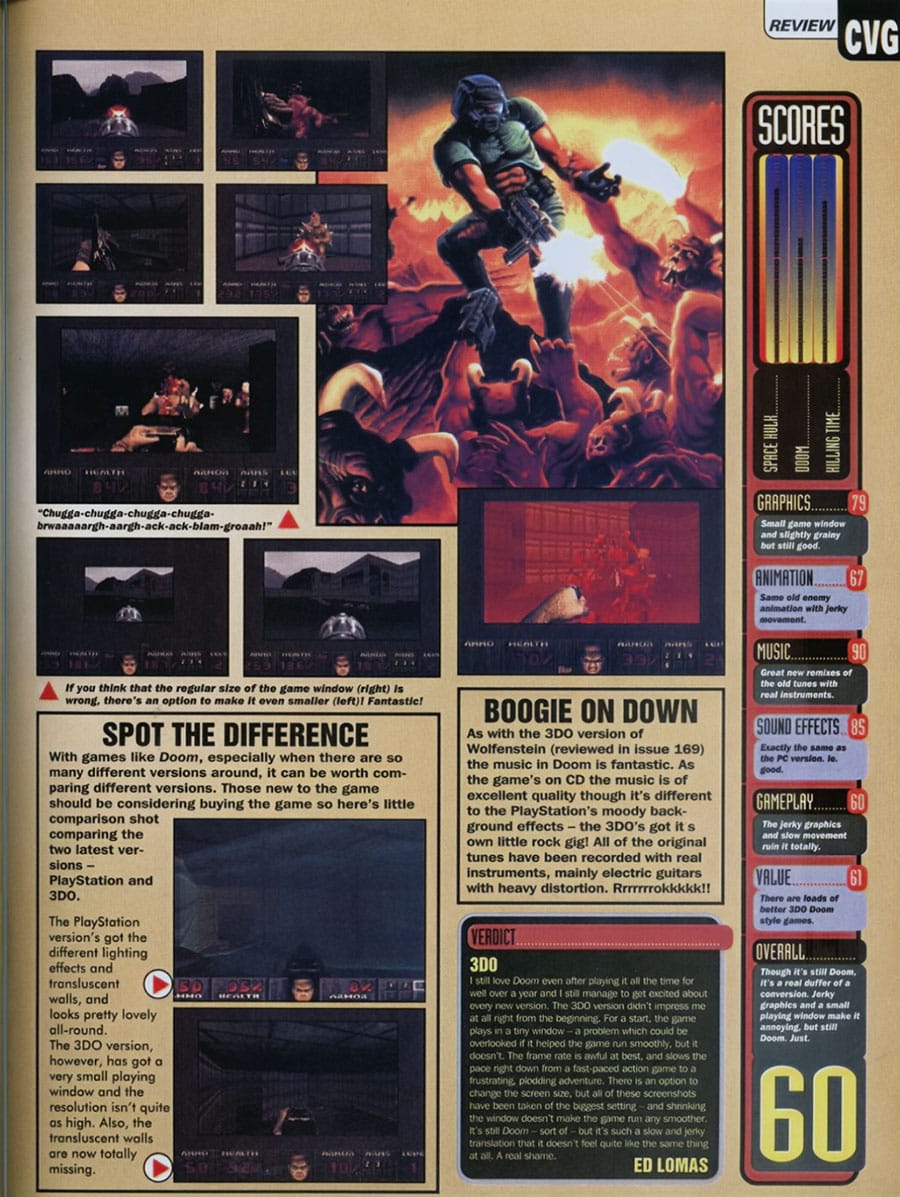
Reviews for 3DO Doom were universally scathing.

3DO Magazine, which had previously hyped the game, harshly criticized its performance and graphical shortcomings.

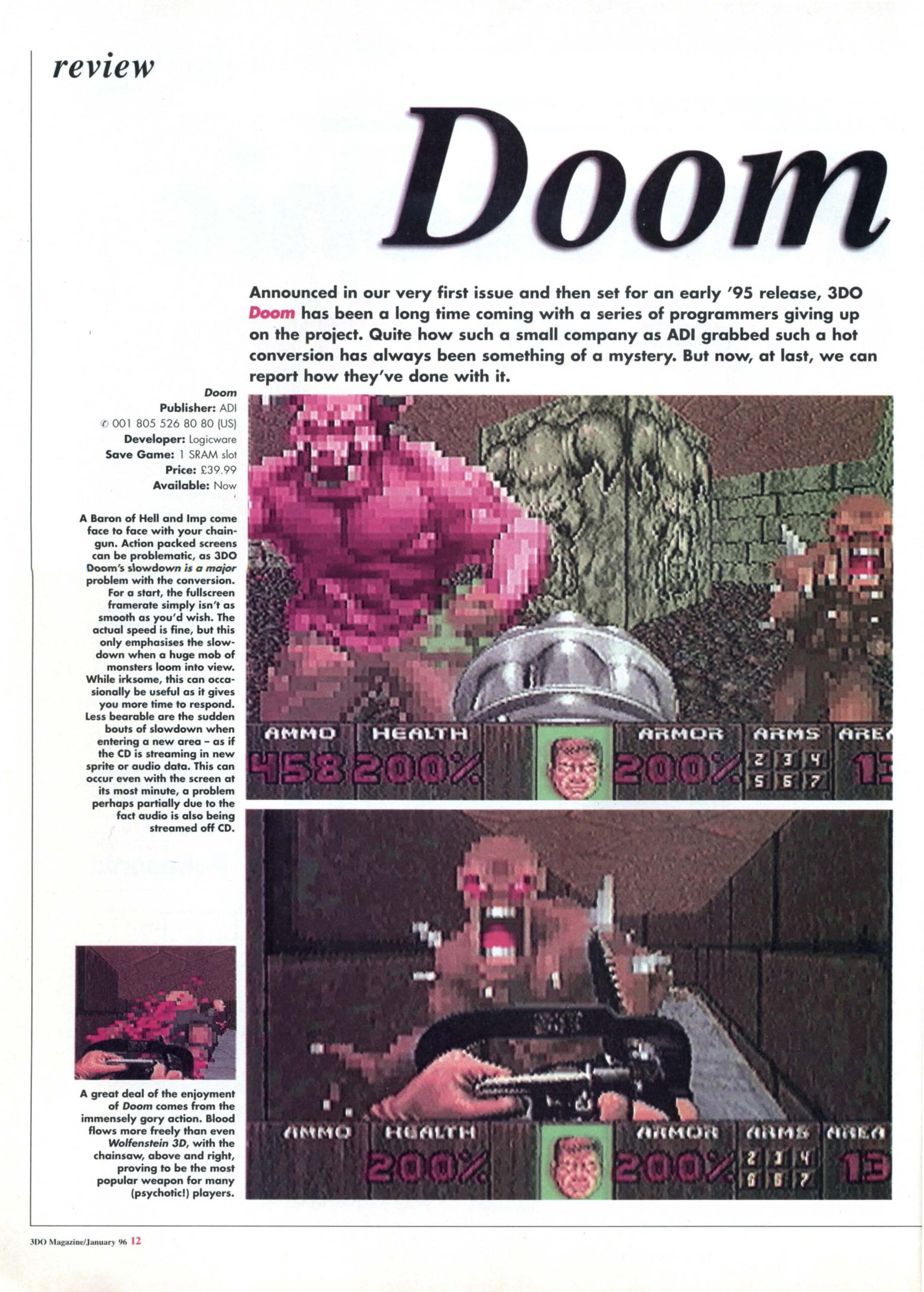
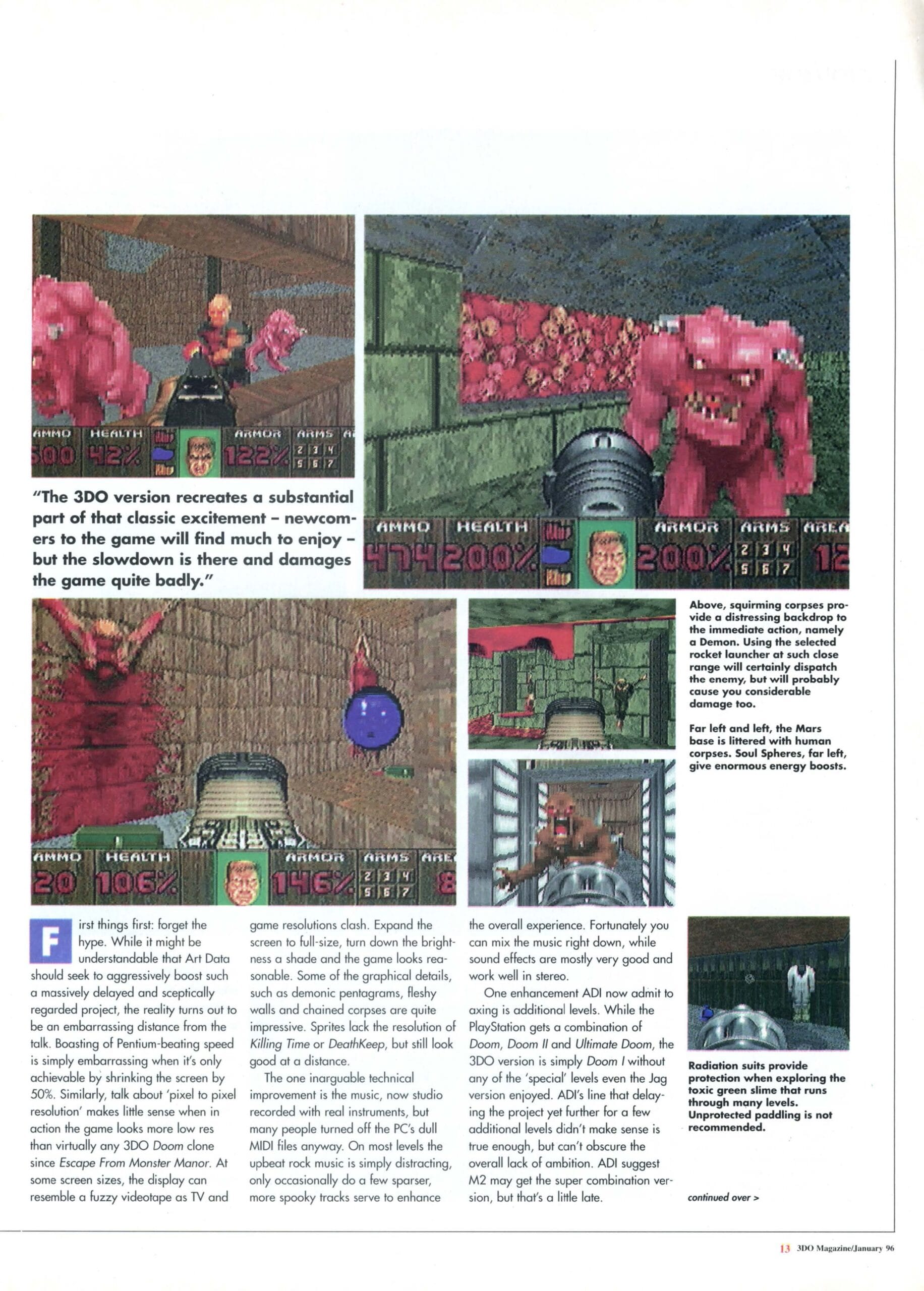
“While it might be understandable that Art Data should seek to aggressively boost such a massively delayed and sceptically regarded project, the reality turns out to be an embarrassing distance from the  talk.

Boasting of Pentium-beating speed is simply embarrassing when it’s only achievable by shrinking the screen by 50%. Similarly, talk about ‘pixel to pixel resolution’ makes little sense when in action the game looks more low res than virtually any 3DO Doom clone since Escape From Monster Manor.

At some screen sizes, the display can resemble a fuzzy videotape as TV and game resolutions clash.”

Tragically, Randy Scott’s downfall extended beyond the gaming industry. In 2017, he was convicted and subsequently sentenced in 2022 ,of molesting children at his Music Town music school.

In Conclusion:

The 3DO Doom saga serves as a cautionary tale of unchecked hype, mismanagement, and the devastating consequences of prioritizing marketing over substance. It stands as a stark reminder that even the most anticipated projects can falter when driven by ego and a lack of genuine talent.

Optidoom:

There is now a better version of 3DO Doom with many other in-game options developed from the original 3DO Doom source code dumped by Rebecca Heineman. The developer of this new version is Optimus6128.

This version improves performance and adds a load of other game enhancements. You can download Version 3 of OptiDoom from my site here.
Rating
Rated 2 out of 5

Doom 3DO game manual

Doom 3DO Manual

Intro video and gameplay-fullscreen

The stuff that we’re putting together is just going to be phenomenal. I tell everybody to load up your rocket launchers and break out the suntan oil because this is the hottest version of Doom that you’re ever going to see
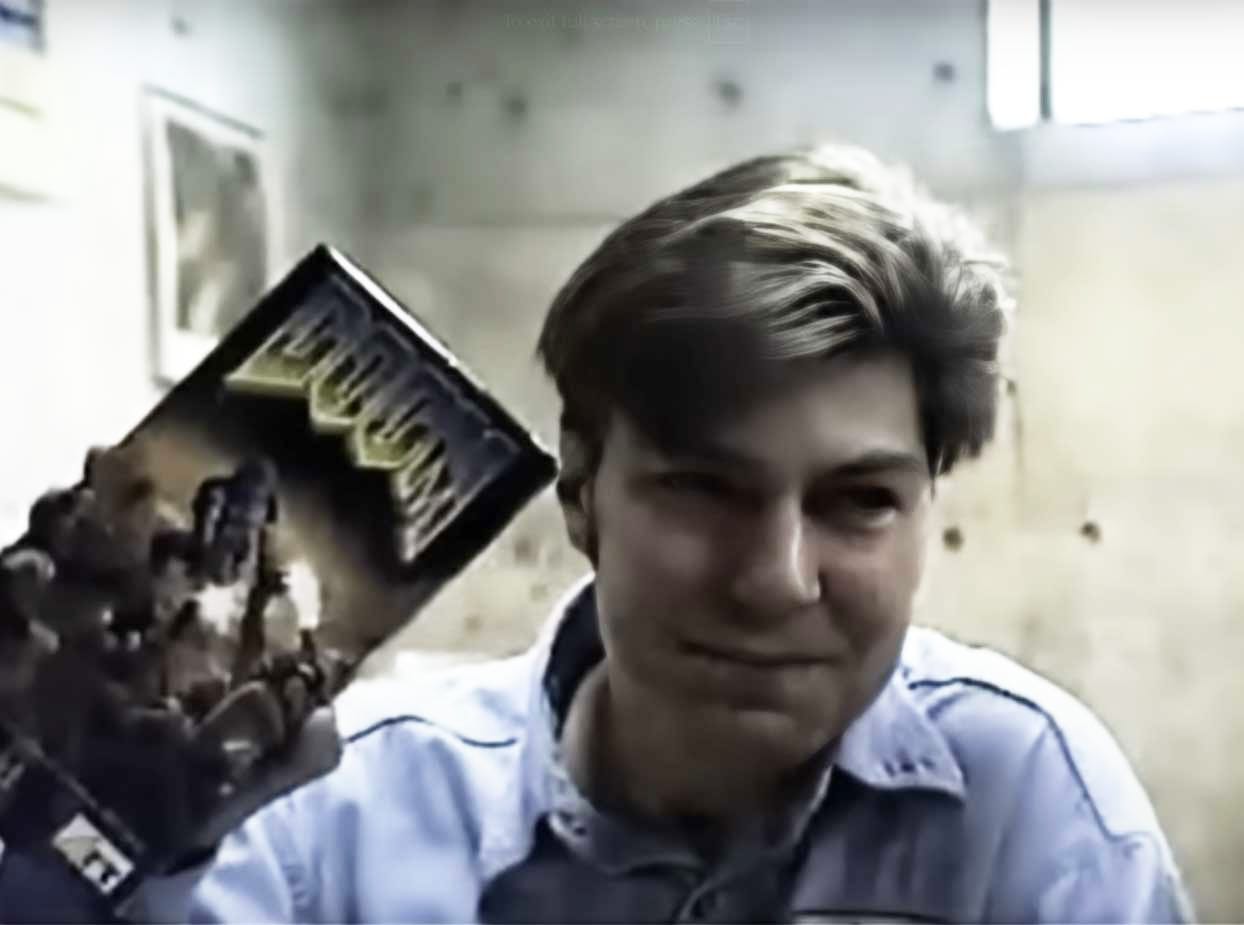
Randy Scott Doom promo
Randy Scott
CEO Art Data

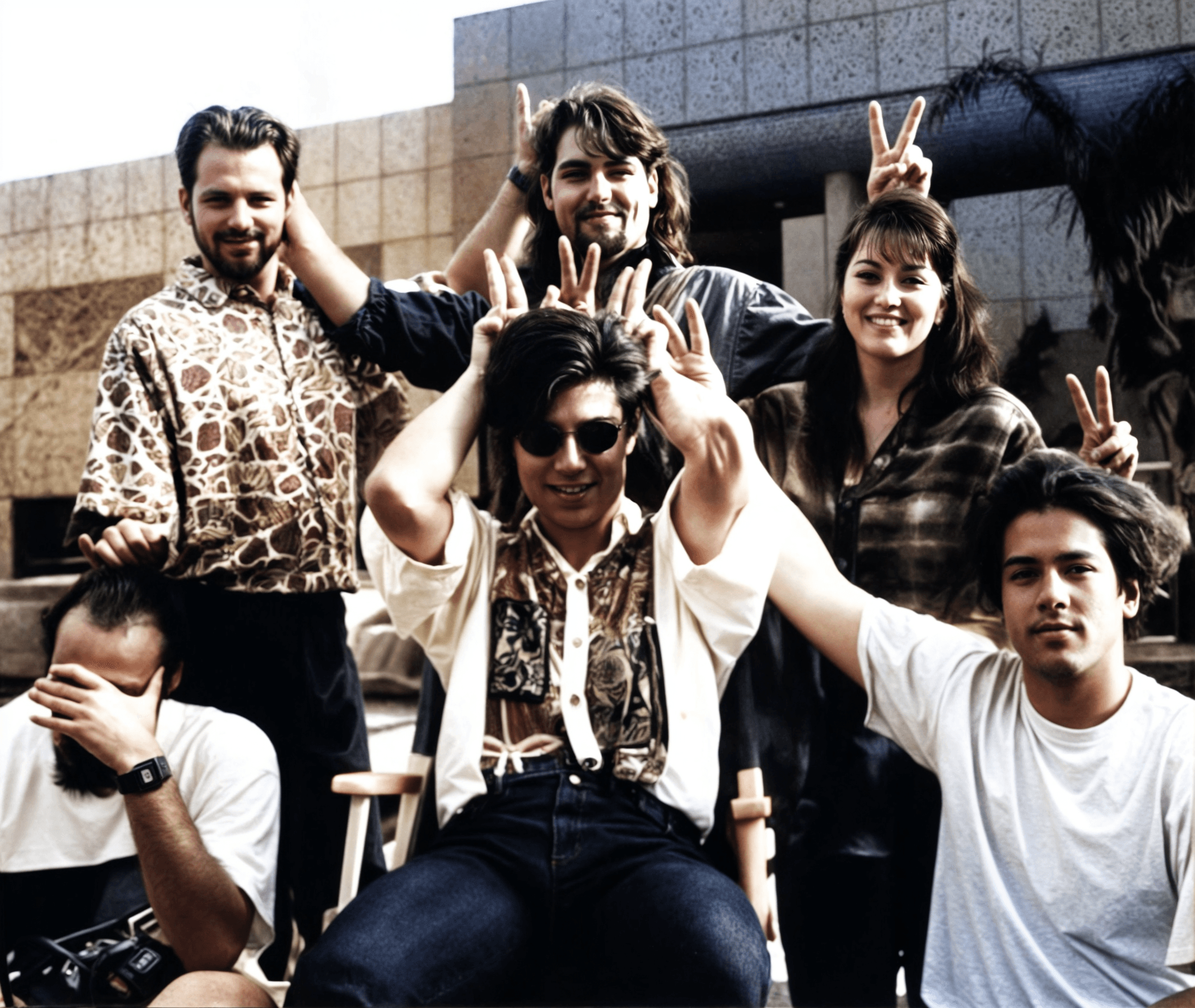
Randy Scott's Art Data team

Randy Scott talking to 3DO magazine Japan

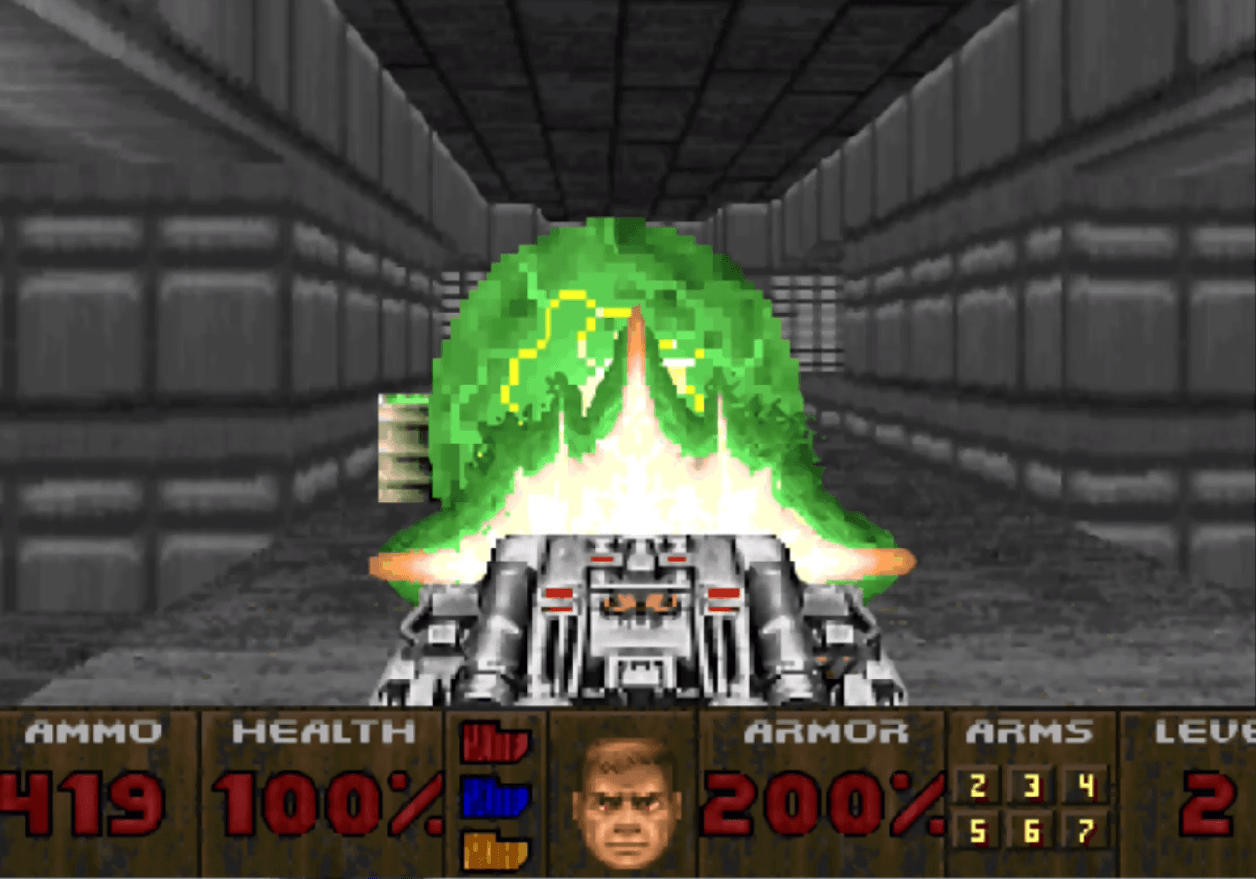
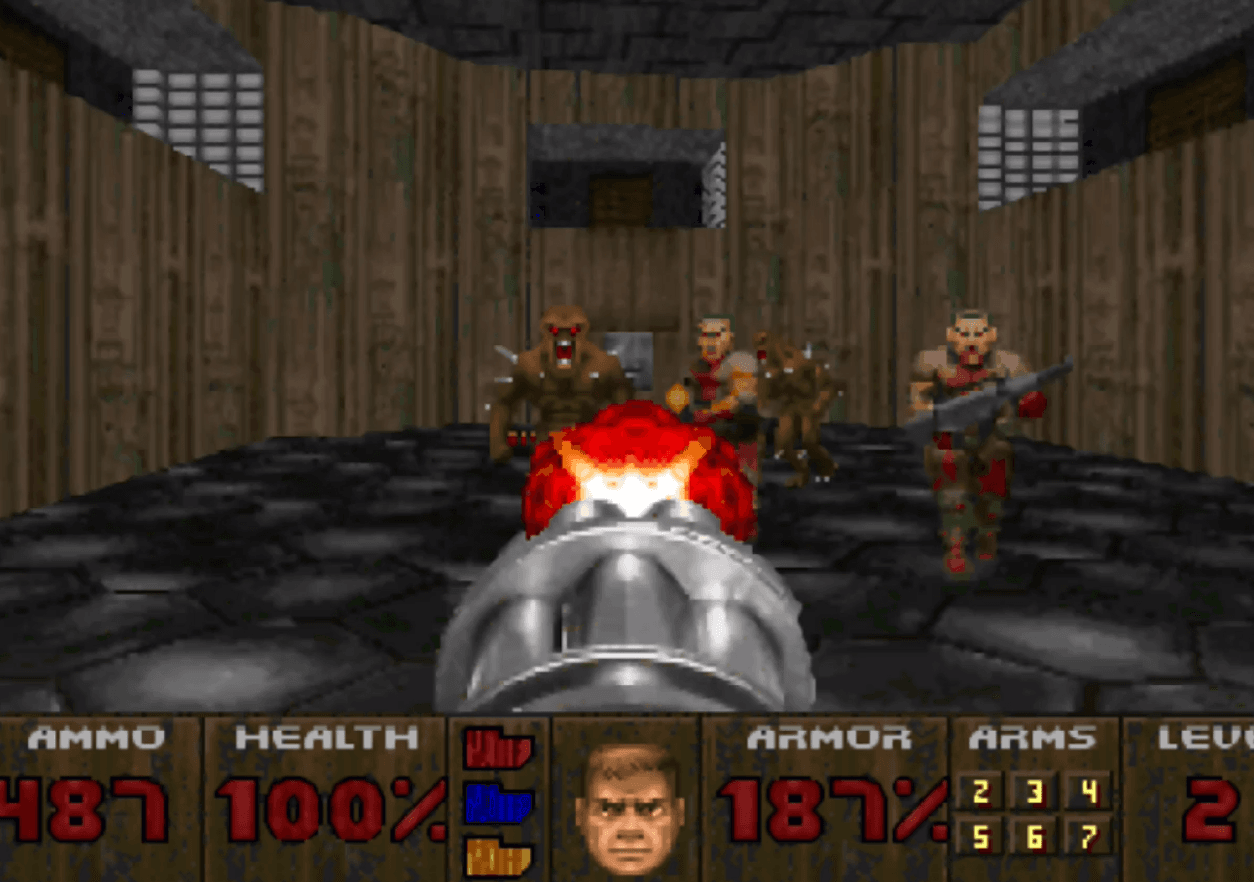
Doom Screenshots

Excellent Doom 3DO soundtrack

Game Box and CD

Randy Scott CEO of Art Data

Randy Scott CEO Art Data Interactive

Doom demons

Chaingun

Short Biography of Rebecca Heineman

Rebecca Ann Heineman (born October 30, 1963) was a pioneering programmer and game developer whose technical skill made her one of the industry’s go-to engineers for difficult platform ports. She first rose to public attention by winning an early national Space Invaders championship in 1980 and soon turned that early interest into a career: co-founding Interplay in 1983 and later founding or leading several studios (Logicware, Contraband Entertainment, Olde Sküül). Her career centered on deep, low-level engineering — writing platform code, engine work and ports that took games to systems they otherwise wouldn’t run on.

3DO connections and technical work

Heineman’s reputation in the 1990s was especially tied to porting and low-level engineering for multiple platforms, and the 3DO era was one of the console/PC generations she worked on. She is credited with doing ports and platform work for major PC titles onto alternate systems, and her resume includes work on Wolfenstein 3D and other projects that were adapted for the 3DO family among many other platforms. She also worked on ports of Doom (highlighted on this page) and other high-profile engine work which overlapped with the mid-1990s 3DO/console porting scene. That technical portability — getting complex PC engines to run on limited or different hardware — is a through-line of her career.
Beyond the 3DO connections themselves, Heineman’s expertise was sought by big companies for platform-specific problems: over the years she contributed low-level work, optimization and porting support for studios and platforms including Microsoft, Sony, Electronic Arts and others. That same technical skillset is what made her an effective leader of smaller engineering teams that tackled tricky cross-platform projects.

Later life and public battle with cancer

In early October 2025 Heineman publicly revealed an aggressive cancer diagnosis — specifically adenocarcinoma that had already affected her lungs and liver — and launched a GoFundMe to help pay for treatments and related medical costs. In her campaign update she described intense pain, installation of a chemo port in early October, and the heavy financial burden of using treatments not included in her health plan.  The announcement prompted an immediate outpouring of support from the gaming community.

Over the following weeks, coverage noted that the disease was aggressive and that Heineman’s prognosis was poor. Community fundraising quickly raised significant sums, and many colleagues and fans publicly sent messages of support. In mid-November 2025 she posted that her condition had become terminal and requested that remaining funds be directed toward funeral expenses; she died on November 17, 2025. Her passing generated tributes across the games industry, with peers praising both her technical brilliance and her long-standing advocacy for queer and trans visibility in tech and gaming.

Legacy — technical bridge building and community

While many obituaries and retrospectives understandably highlight Heineman’s role as a co-founder of Interplay and as an early female/trans figure in games, an equally important part of her legacy is technical: she was a pragmatic engineer who repeatedly bridged incompatible systems — whether Macintosh, 3DO, console or various PC variants — so that games reached new audiences. Her work on ports (including mid-90s console ports tied to the 3DO) helped preserve and extend the reach of influential titles. Her final months — sharing difficult medical news openly and receiving visible community support — also underscored how many in the game world regarded her as family.

Infamous Doom FMV shoot

Doom 3DO greenscreen shoot gore
Doom 3DO greenscreen shoot with added gore

Doom review from 3DO magazine

Doom review from CVG magazine

You may also like: